

CH&LS meeting on 28–29 August in Copenhagen
by Herbert Bastian, in collaboration with Michael Negele and Frank Hoffmeister
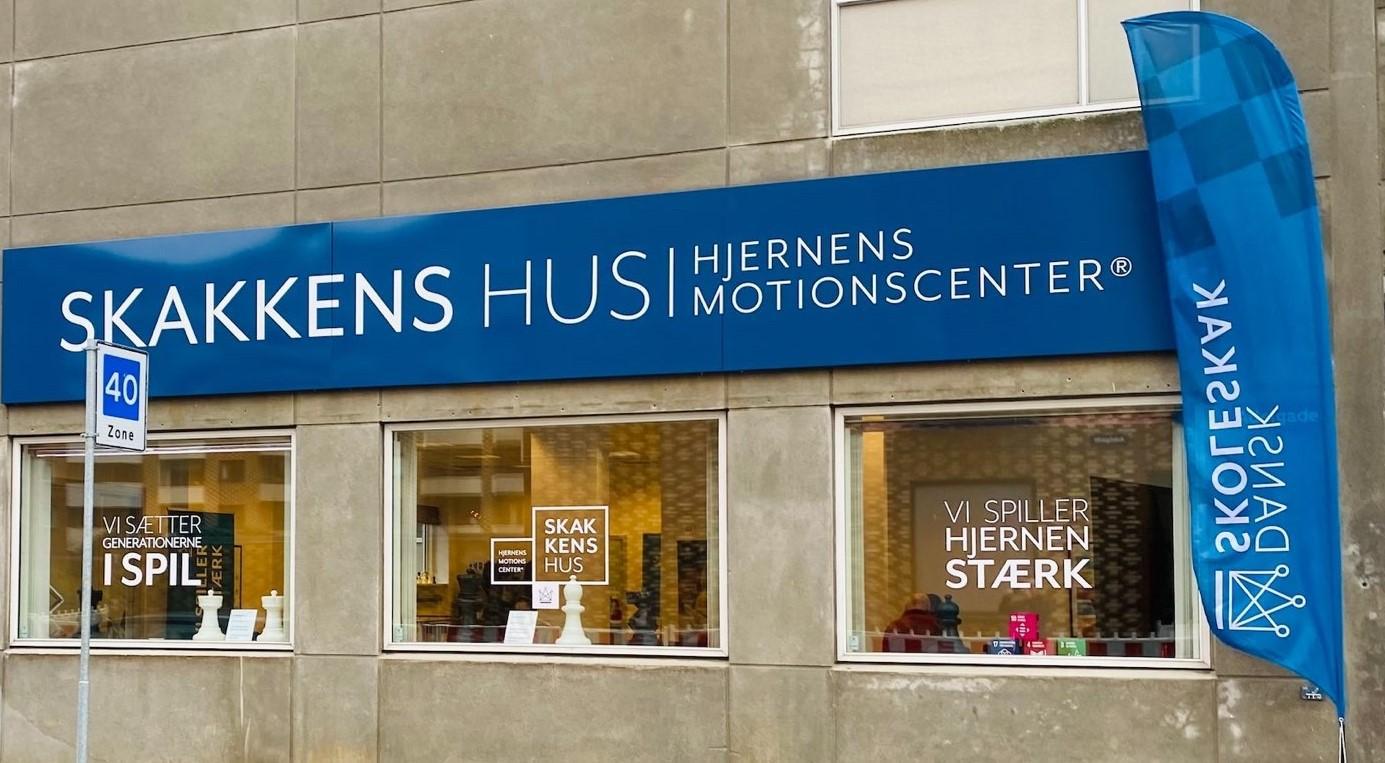
This year’s annual meeting of the Chess History & Literature Society (CH&LS) took place from 28 to 29 August at Skakkens Hus (House of Chess) in Copenhagen. Following Marostica (Italy, 2022), Belfort (France, 2023), Budapest (Hungary, 2024) and Valencia (Spain, 2025), the organisers finally ventured on the long-overdue trip north. Accordingly, the eight well-chosen, highly interesting talks also had a strong Nordic focus. As in previous years, at least some of them will be published by Jean Olivier Leconte and Wilfried Krebbers on the CH&LS website.
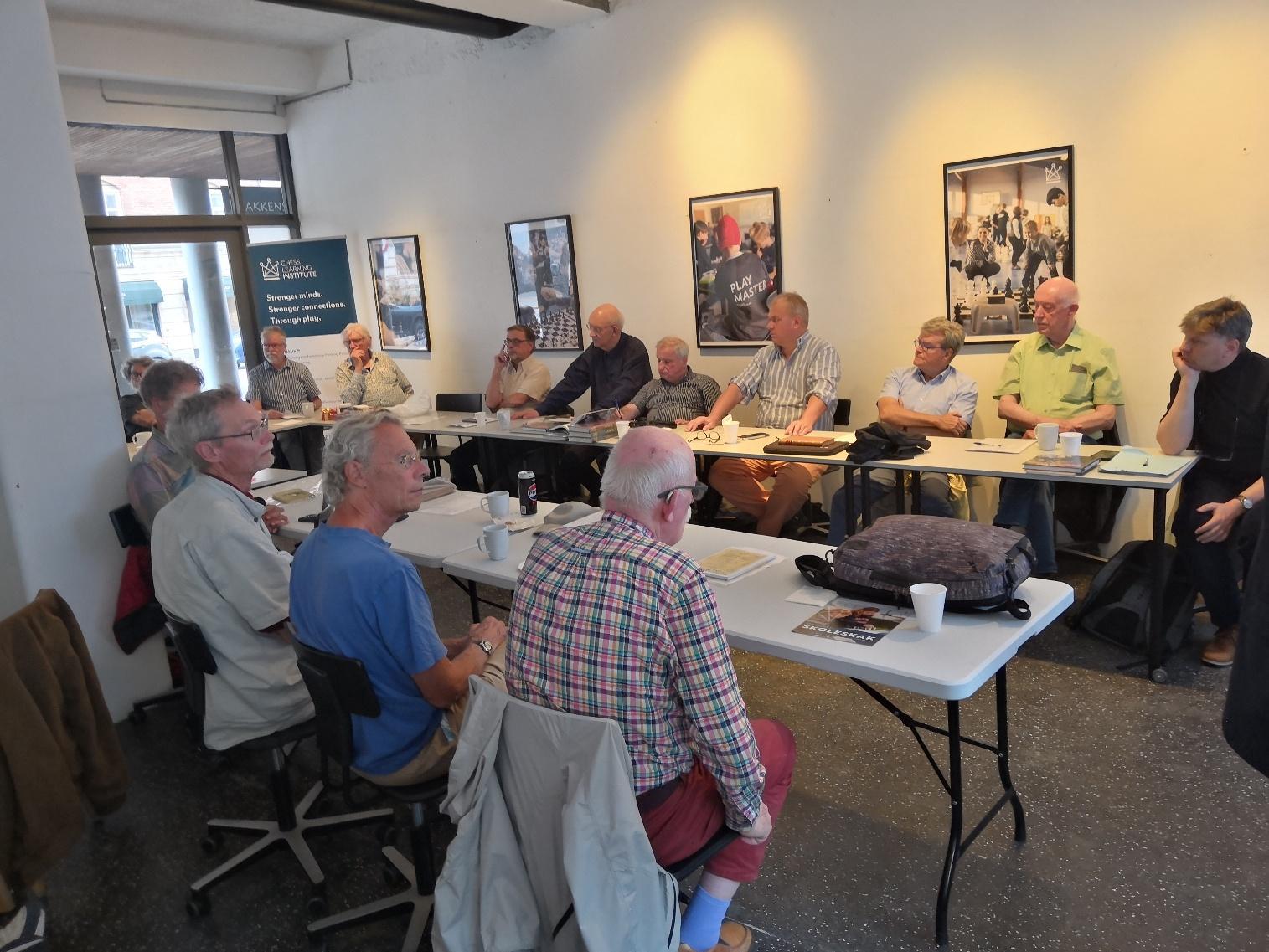
Before I go into the content of the talks, I would like to say a few words about the members of the association. It is only natural that most of them have reached an advanced age. In one’s younger years, one tends to prefer the excitement of tournament play to delving into the history of chess. The good news is that the CH&LS meetings are generally attended by open-minded people who have maintained a high level of mental and physical fitness and have found an exceptionally exciting and interesting pursuit in the study of chess history.
According to the figures given on the website, the association currently has 4 honorary members, 45 senior members (aged over 75), including one woman, and 80 members, including 2 women. Following a number of difficult years, membership numbers are on the rise again. There are also 47 deceased members on the register, including one woman and another honorary member. With only 4 out of a total of 176 members registered to date (2.3 per cent), the proportion of women still leaves room for improvement. Seven accompanying partners took part in the current conference and listened to the fascinating presentations, in some cases with great patience. On the first day, Swedish Grandmaster Jonny Hector (62) honoured the conference with his presence.
The dry figures come to life when you add names. To give an impression of the calibre of the association, I would like to mention, as representative members, the late grandmasters Jurij Awerbach (1922–2022), Lothar Schmid (1928–2013), Boris Ivkov (1933–2022), Fridrik Olafsson (1935–2025) and the Austrian-born Russian chess historian Isaac M. Linder (1920–2015).
As one can easily imagine, new members of both genders, including those of diverse backgrounds, are sought after and welcome. Perhaps the following remarks may help to further stimulate the interest that is already beginning to take root.
Prof. Dr Frank Hoffmeister (*1969, Elo 2149), a lawyer working for the European Union and a chess enthusiast, has brought a breath of fresh air to the organisation since his election in 2022 in Marostica, working with a small, well-assembled team. Key features of his leadership style include short, straightforward decision-making processes, attractive venues, expert speakers covering fascinating topics, and a respectful approach towards all those involved.
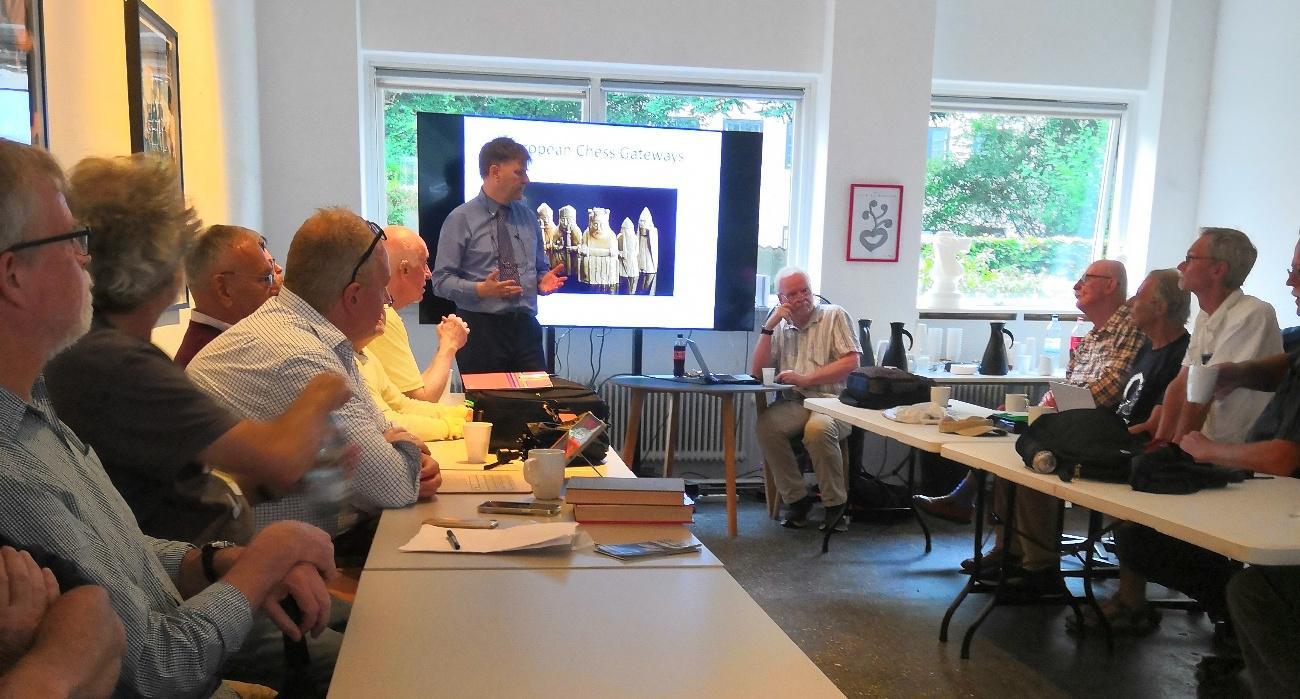
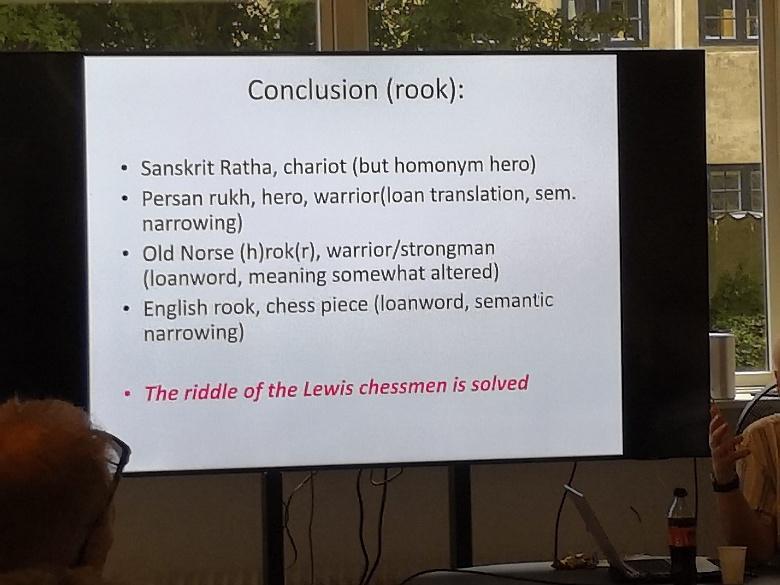
Now to the talks, each of which lasted about an hour and was followed by a discussion. The series began with the Norwegian Morten Lilleøren speaking on ‘The northern way of the game to Europe’. Morten, who ended his active career around 2010 with an Elo rating of approximately 2100, found studying the history of chess far more exciting, as he told me over dinner. There is no time pressure or depression following defeats; instead, every new discovery brings a sense of euphoria, and there are still many such discoveries to be made. My own research findings confirm the high quality of Morten’s insights into the route the game took via the north to Central Europe, which presumably existed alongside the route from the south. However, we must wait for the promised manuscript to be ready for publication, and there are still questions to be clarified, so we must remain at a general level here.
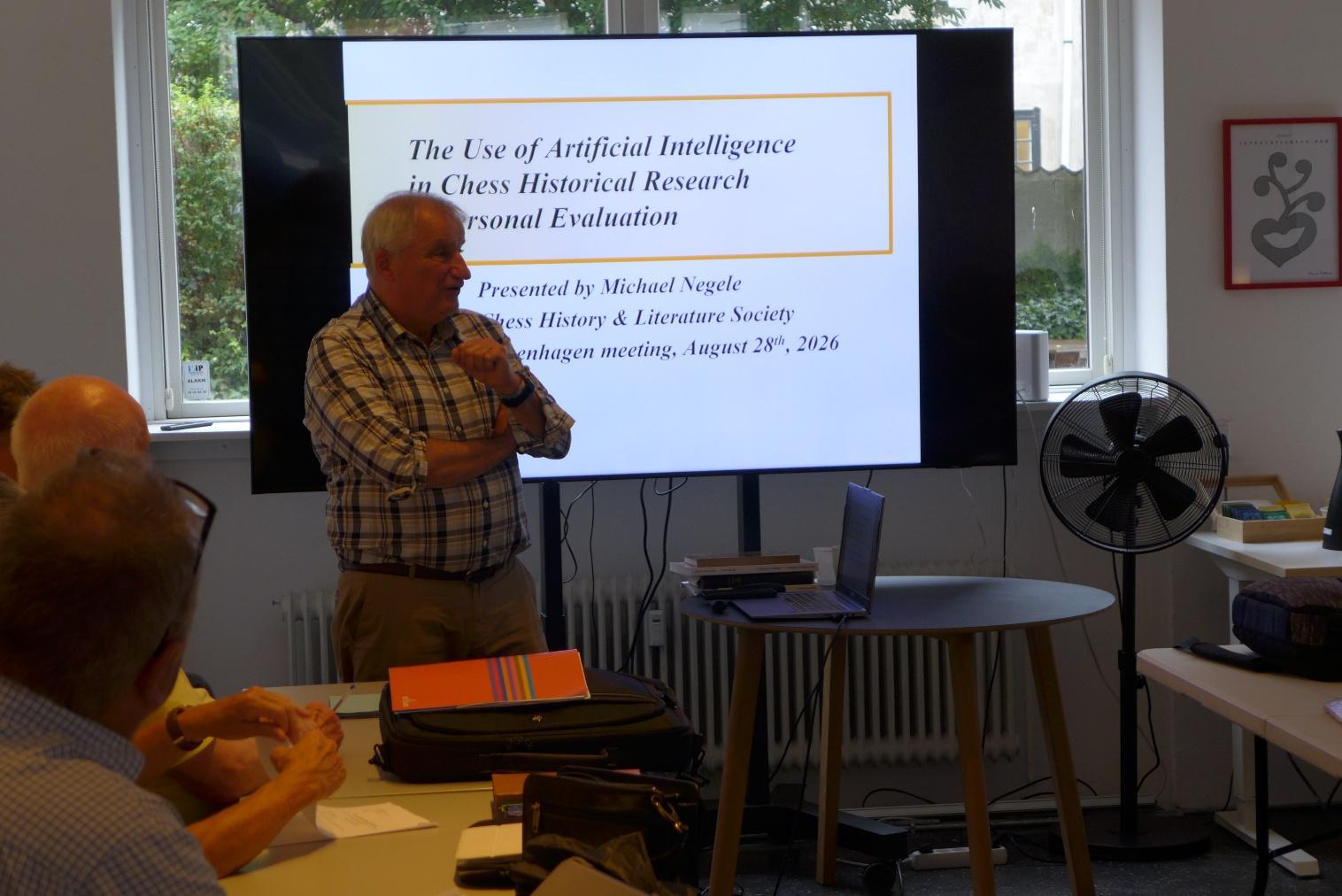
Following a well-deserved coffee break, Dr Michael Negele, Praeceptor historiae scaccorum Germanicae and honorary member of the CH&LS, now fully recovered, demonstrated that he remains at the forefront of chess history research. His lecture, entitled ‘The use of artificial intelligence for research in chess history’, used examples to illustrate how the use of artificial intelligence can enormously speed up the process of extracting information from given literary sources, although one should avoid switching off one’s own intellect when examining the suggested results. Otherwise, one might occasionally be taken in by a hoax, as demonstrated by the creation ‘Emanuel von der Lasa’, which appeared entirely plausible to the uninitiated. Frankly, I was relieved that the AI has so far failed to refute my theories on the Chapais manuscript, and I am very keen to see what the future holds in this regard.
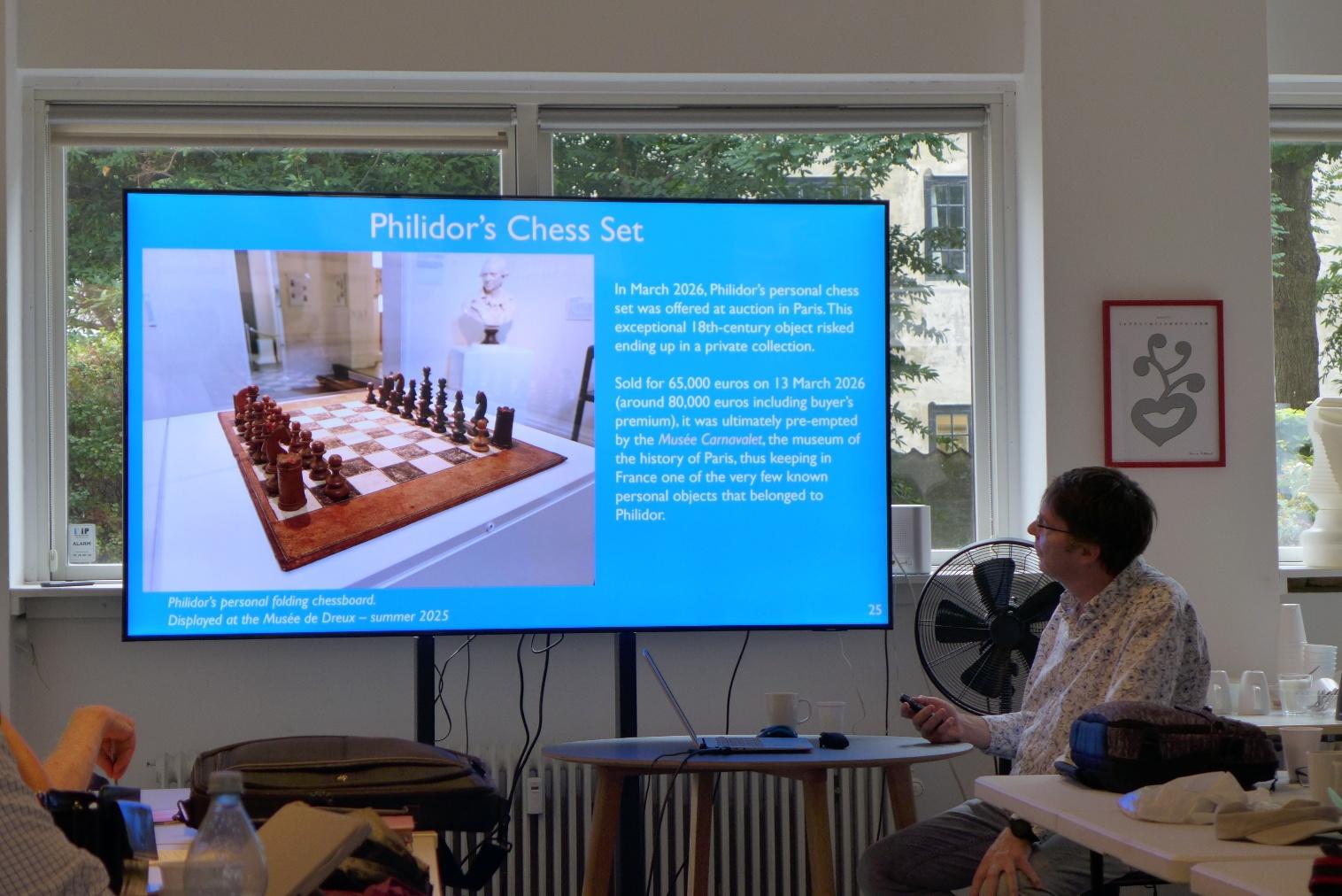
Next up was French FM Jean Olivier Leconte (Elo 2195), who created the highly recommended website https://lecafedelaregence.blogspot.com/, featuring articles on French chess history, and who maintains the CH&LS website. On the occasion of the Tricentennial of Philidor, the chess player, Jean-Olivier demonstrated that, even after three hundred years, there is still more to discover about the famous Frenchman, who was born in 1726. Anyone wishing to find out more can visit the website at the address provided or, shortly, the CH&LS website.
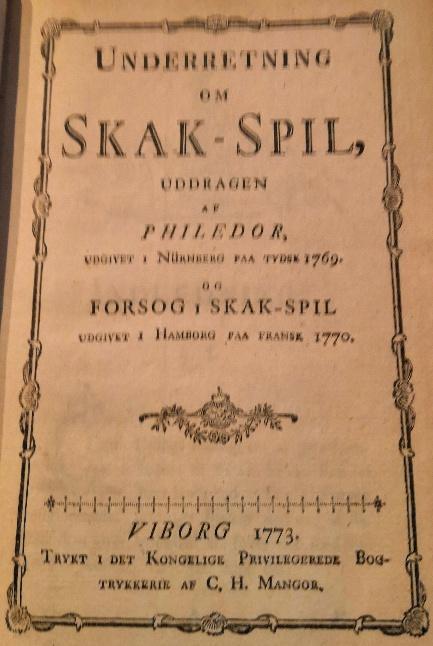
This was followed by a presentation by Claes Løfgren, a truly wonderful person, on ‘The Danish edition of Philidor’s chess treatise of 1773’ – a very rare edition which does not appear to be available in digital form. Claes, who is the secretary of the CH&LS, was responsible for organising this successful meeting.
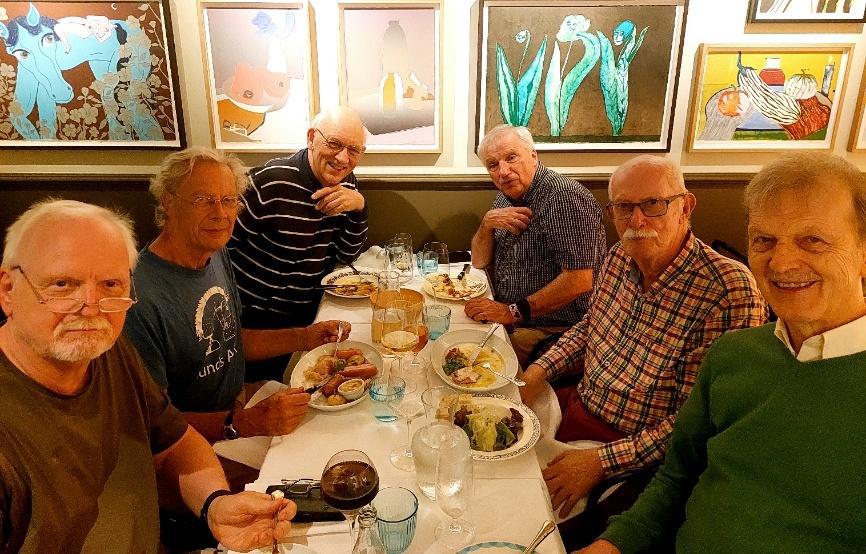
As usual, the CH&LS General Assembly took place on the first day. The reports are always transparent and concise, so that the formalities can be dealt with swiftly thanks to the excellent work of the Executive Committee. Of particular note was Per Skjoldager’s report on the To Biblion project, which has set itself the goal of cataloguing the entire body of classical chess literature; however, given the exponential growth in the number of published works, this will no longer be feasible in the future. A word of warning came from the treasurer, Henri Serruys, as the CH&LS’s growing activities have caused the cash reserves to dwindle, as was to be expected. Everything is still within safe limits, however. As usual, the tradition of rounding off the first evening with a dinner together was observed.
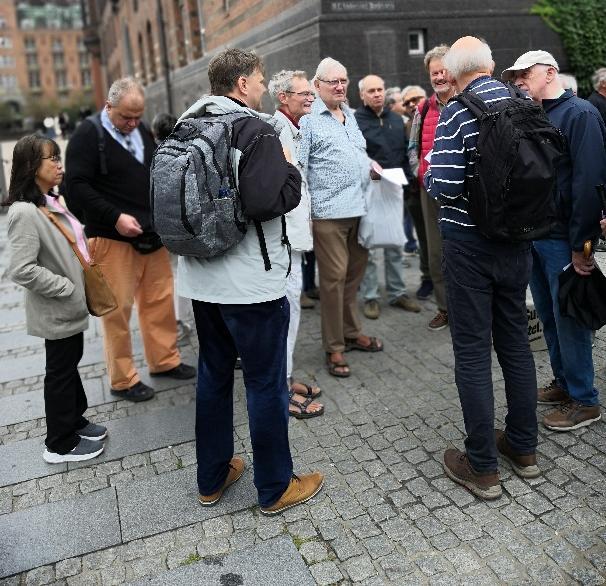
In keeping with another tradition, the guided tour on Saturday morning from 10.00–12.00 was led by Kaare Vissing Anderssen, who peppered the tour with anecdotes and created lasting memories at 14 fascinating locations in Copenhagen’s Old Town. At the ninth stop, on Studiestræde 24, the participants took a look at the house where the first Danish International Master, Jens Enevoldsen (1907–1980), and the first Danish Grandmaster, Bent Larsen (1935–2010), had lived for a time. Now I wonder whether this house will one day be home to the first Danish World Champion.
-
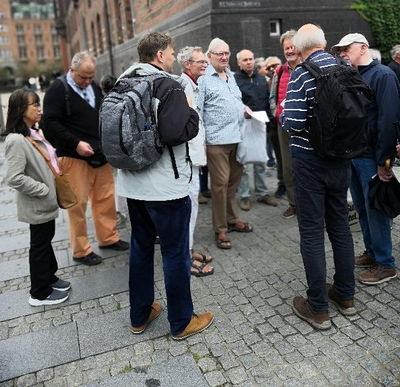
Meeting at the town hall for the guided tour. In the centre of the picture, from left to right: Frank Hoffmeister, Claes Løfgren and Kaare Vissing Anderssen. -
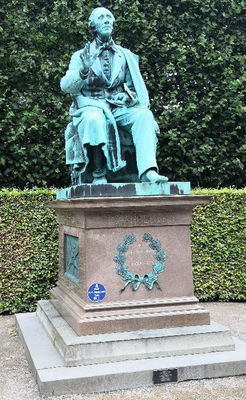
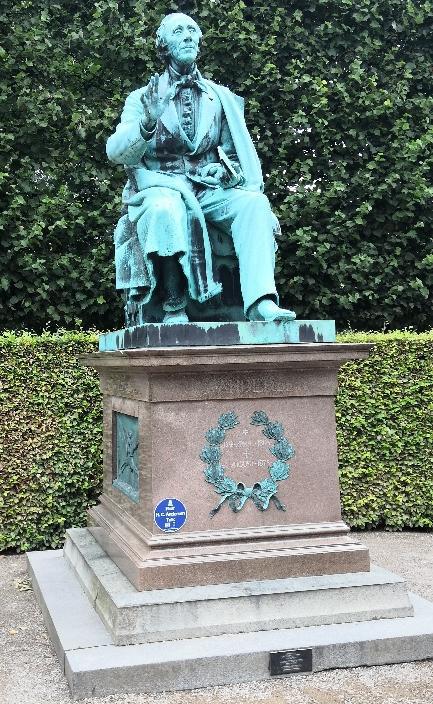
A monument to the Danish writer Hans Christian Andersen (1805–1875).
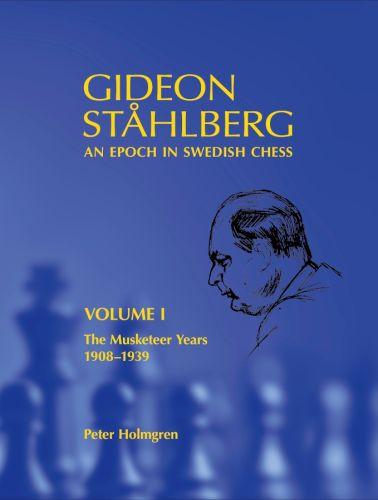
In the afternoon, Peter Holmgren gave the first talk on Gideon Ståhlberg (1908–1967) – the first Swedish Grandmaster. The website Chessmetrics.com lists the world-class player – who was notorious for his excessive drinking and died aged just 59 – as having reached a peak world ranking of number 3 between February and July 1948. In 1950, Ståhlberg was among the first players to be awarded the title of Grandmaster by FIDE. It was refreshing to discover a more positive image of the Swede, who was described as a player who always conducted himself correctly during games and, in his later years, as a caring family man. His chess achievements, and in particular his time in South America, are well documented on the English-language Wikipedia page.
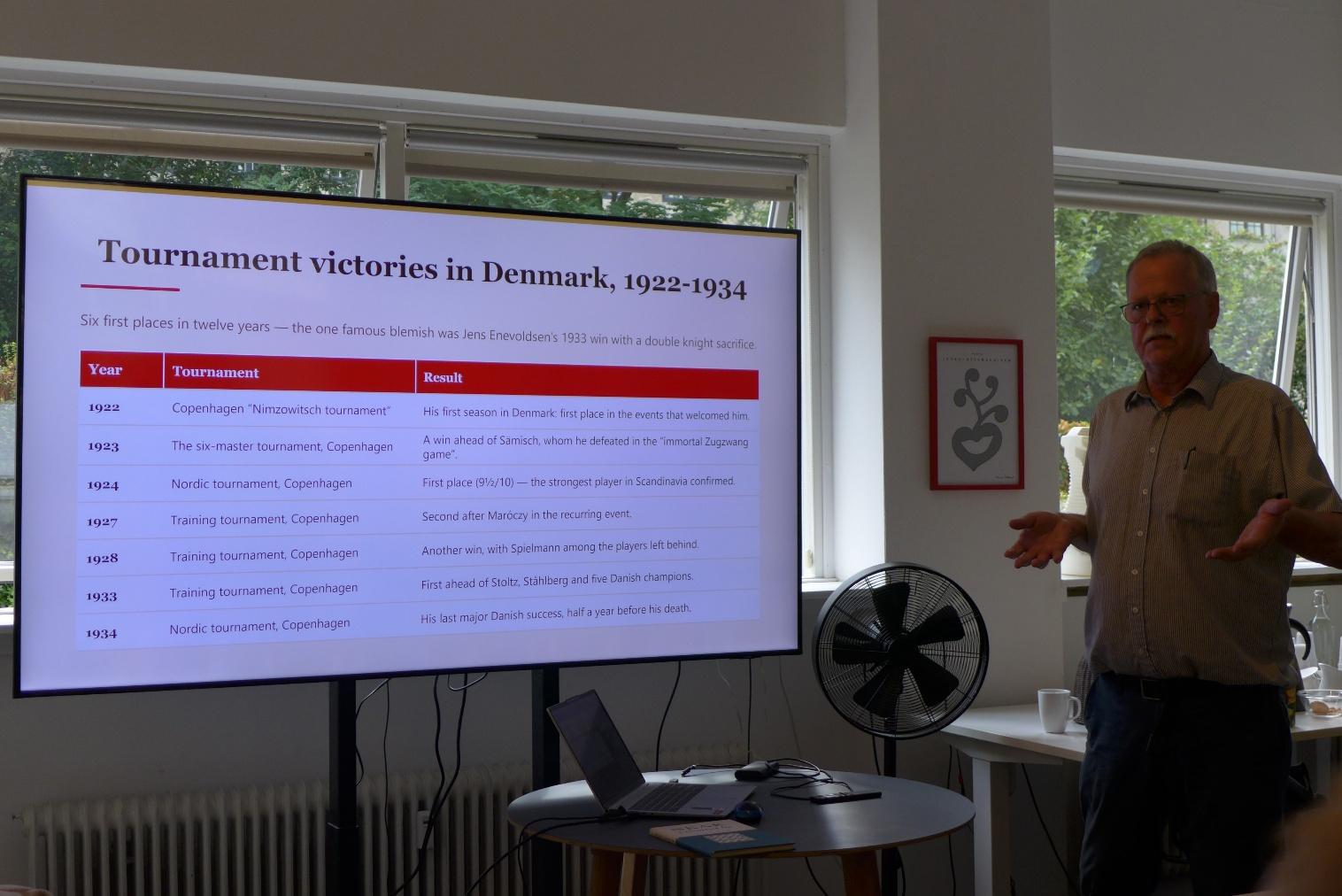
After the coffee break, Per Skjoldager gave a detailed talk, including much information that was new to me, about Aron Nimzowitsch and his role in Danish chess. Nimzowitsch’s famous book ‘My System’ has remained popular to this day, although there were briefly some critical comments regarding the standard of its content. The principle of prophylaxis was first clearly described by Nimzowitsch, and two openings are named after him. The Nimzowitsch Defence remains one of the most important defences against the double-step of the d-pawn on the first move.
Per has impressively demonstrated that Danish chess owes a great deal to Nimzowitsch. Born in Riga (then part of the Russian Empire), the grandmaster studied philosophy in Berlin and, from 1922 until his death in 1935, lived in Copenhagen as a Danish citizen.
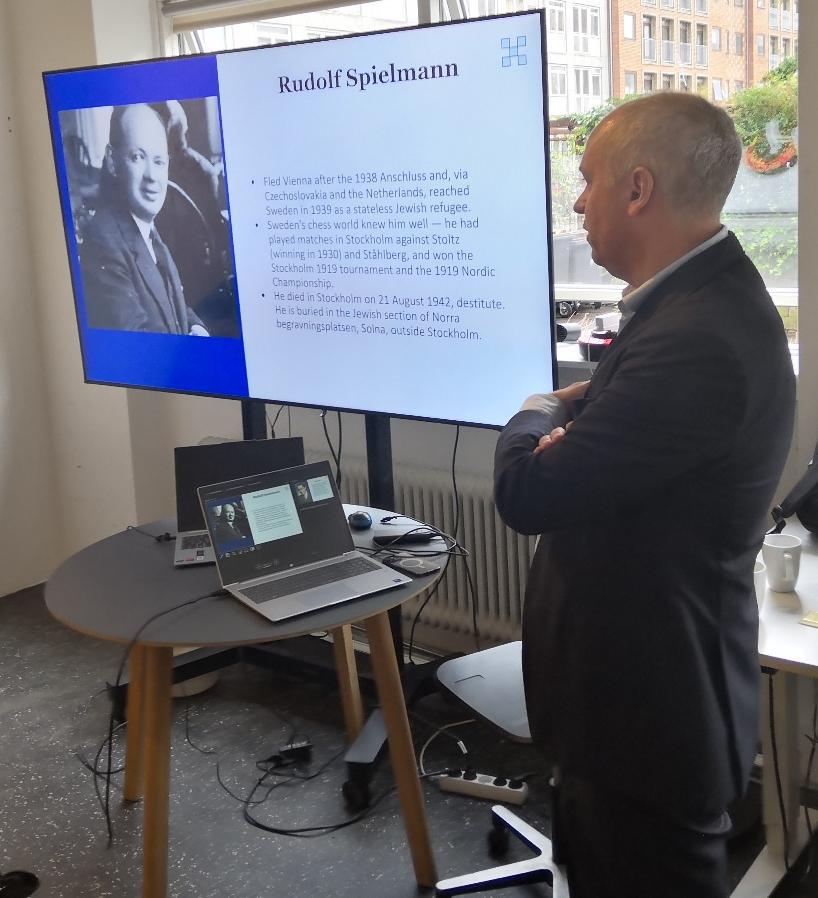
Matthias Johansson filled an important gap with his informative talk, ‘Chess in Scandinavia during the Second World War’, from which I’d like to share a little gem. Much like Alan Turing’s decryption of the Enigma, a chess player was also involved in cracking a code in Sweden during the Second World War. As early as 1940, the Swedish mathematician Arne Beurling managed, in just two weeks and using nothing but pen and paper, to crack the code of the Siemens cipher machine (Siemens & Halske T52) (KI-information). He was assisted in this by Åke Lundqvist (1913–2000), the 1945 Swedish correspondence chess champion.
Naturally, an article about Denmark’s most famous grandmaster was a must. Jan Lofberg presented this under the title ‘The Last Viking: World Championship candidate Bent Larsen’.
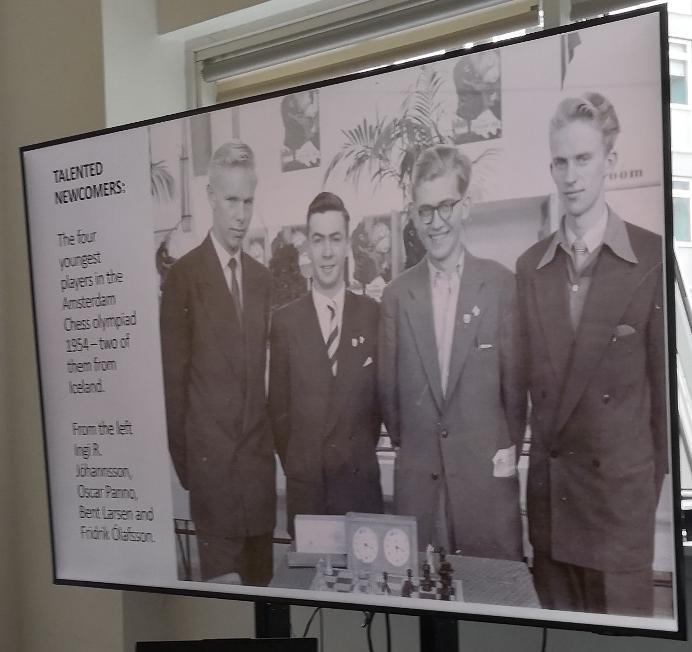
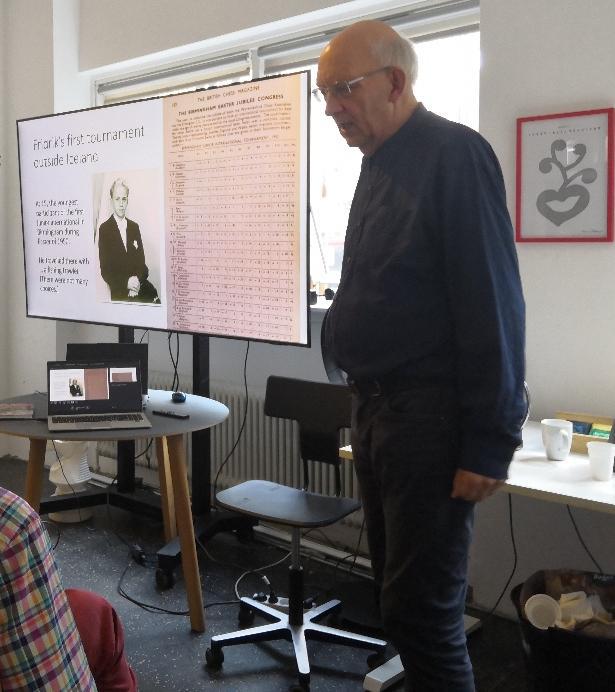
The final talk was given by Øystein Brekke, who, amongst other things, had authored the commemorative publication marking the 100th anniversary of the Norwegian Chess Federation in 2014, presenting his book The Chess Saga of Friðrik Ólafsson (2021), in which he paid a fitting tribute to the former world-class grandmaster and FIDE President (1978–1982), who passed away in 2025 at the age of 90.
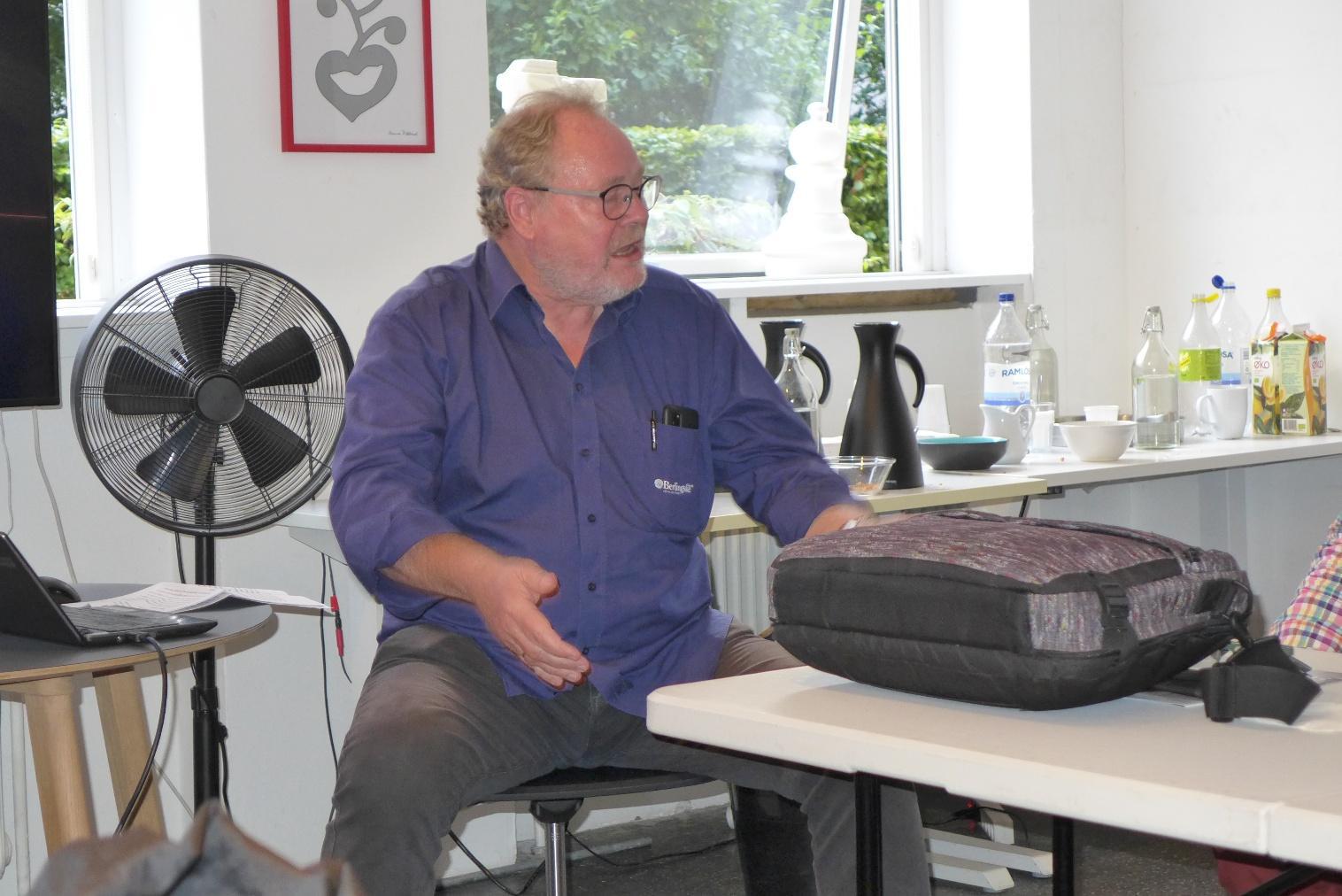
To round off the event, Jan Løfberg presented the first two volumes of his monumental biography of Larsen. They cover the periods 1935–1965 and 1966–1972.
All in all, the conference provided many new insights and offered the opportunity to engage in conversation with a delightful group of chess historians from across Europe. We can already look forward to next year’s conference, which coincides with the German Chess Federation’s 150th anniversary. Whilst the German Chess Federation is struggling to organise a fitting anniversary event in its founding city of Leipzig, the (internationally active) CH&LS has now decided to hold its conference there in late August or early September 2027. The conference will also be open to non-members, and it is to be hoped that many German chess enthusiasts will take up this opportunity to familiarise themselves with the history of their own federation. See you soon in Leipzig in 2027!
The participants (in alphabetical order): Herbert Bastian, Georges Bertola, Øystein Brekke, Rod Edwards, Calle Erlandsson, Jonny Hector, Frank Hoffmeister, Peter Holmgren, Mattias Johansson, Gero Jung, Jean Olivier Leconte, Morten Lilleøren, Henrik Malm Lindberg, Jan Løfberg, Claes Løfgren, Michael Negele, Darko Plecas, Toni Preziuso, Henri Serruys, Per Skjoldager, Jurgen Stigter, Denis Teyssou, Dominique Thimognier, Guy van Habberney, Kaare Vissing, Francois Zutter, Lars Zwisler.