

Philidor’s Chess Set: The Story of a Heritage Rescue
By Jean Olivier Leconte, President of the Art, Culture and History Commission of the French Chess Federation (FFE)
Originally published in French on the website of the French Chess Federation.
This is the story of how the efforts of a small number of people helped save an exceptional object: Philidor’s personal chess set. They deserve to be warmly thanked here.
It all began on Wednesday, February 25, 2026. That day, I received a text message from François Zutter, a member of the Chess History and Literature Society, of which I am also a member, asking whether I had seen that Philidor’s chess set was to be auctioned in Paris on Friday, March 13.
For me, the news came entirely out of the blue. I had no prior knowledge of it whatsoever. And there was something extraordinary about the announcement, especially in this year marking the tricentenary of Philidor’s birth.
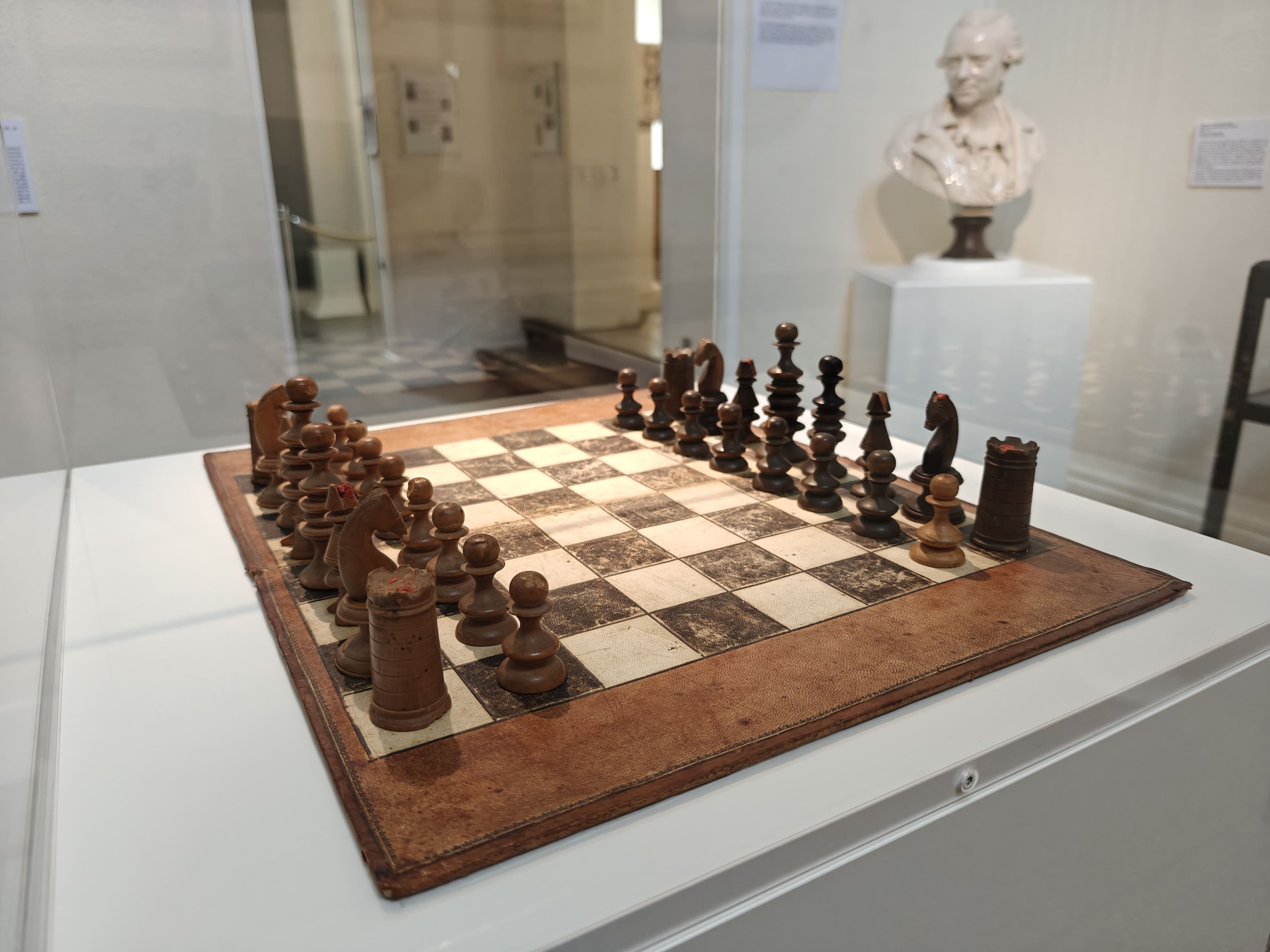
I had already had the opportunity to see and photograph this chess set during the exhibition devoted to Philidor at the museum in Dreux in the summer of 2025. A report I wrote on that exhibition can be found on lecafedelaregence.blogspot.com (in french).
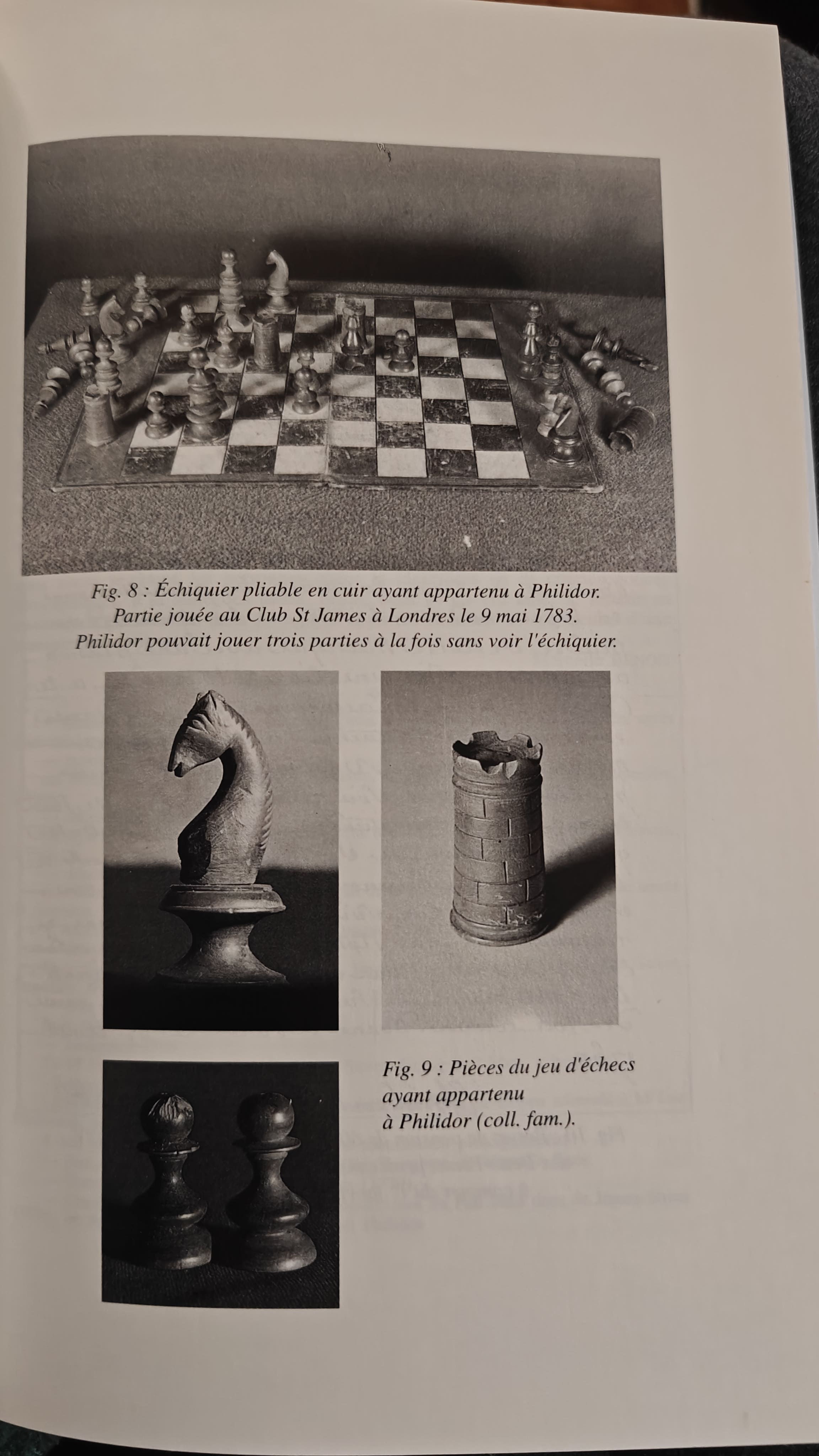
The set also appears in a photograph in an important reference work, Philidor musicien et joueur d’échecs (Picard, 1995). This book is essential reading for anyone interested in Philidor’s life, not least because it contains the text of 135 handwritten letters deposited at the Versailles library by the Danican Philidor family.
Let us return to the sale scheduled for March 13.
The description of Lot 58 can be found here: LE JEU PERSONNEL DU PLUS GRAND JOUEUR D’ÉCHECS DU XVIIIe - Lot 58
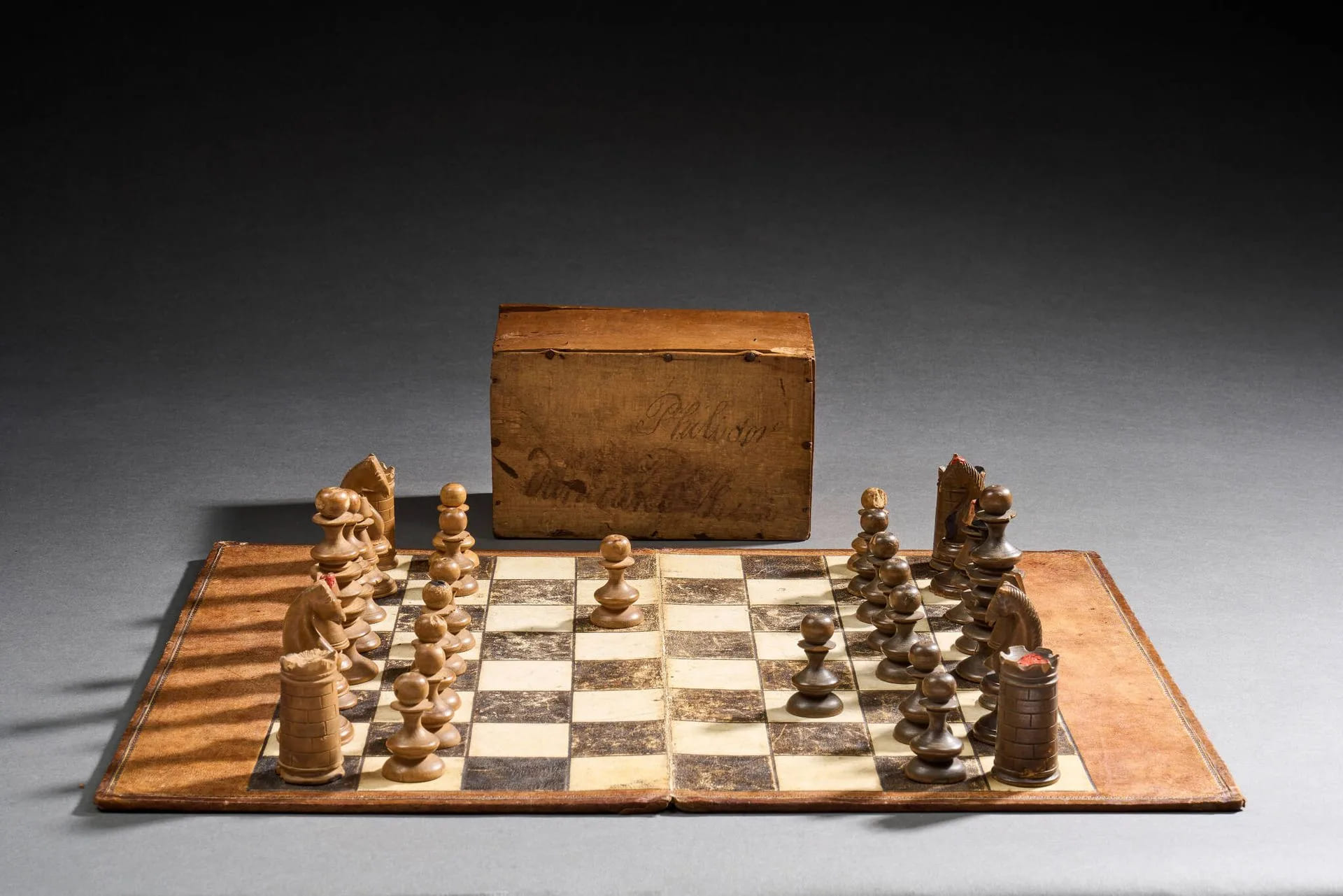
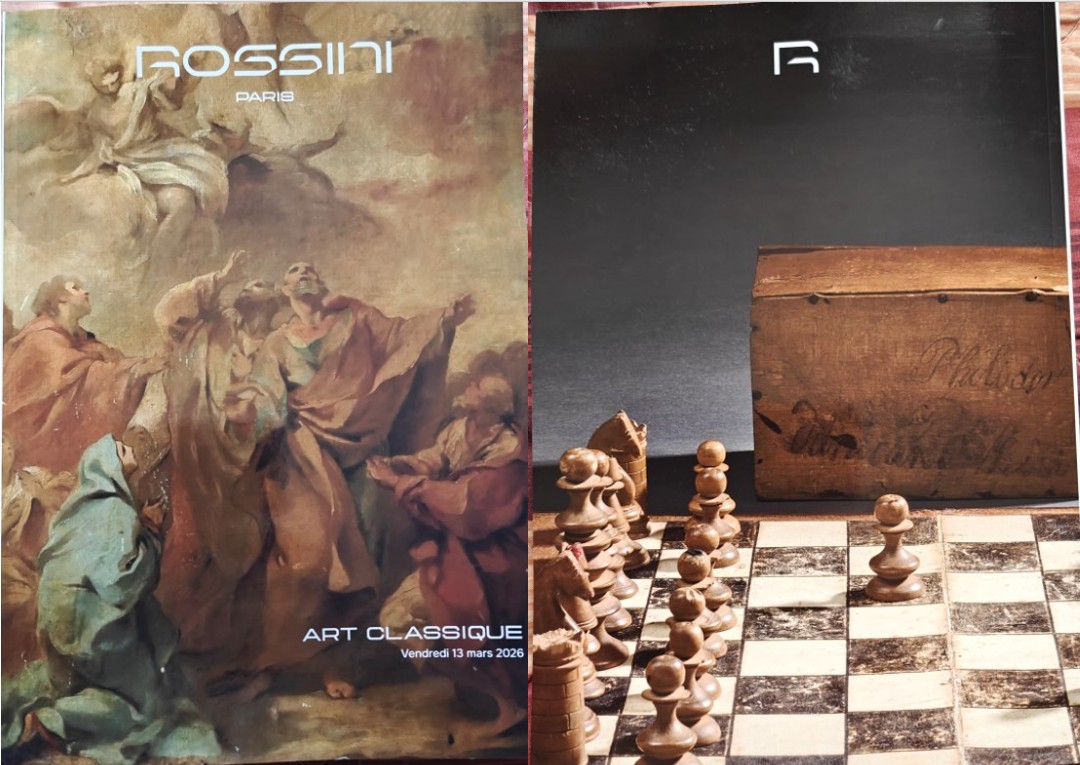
It should be stressed that this chess set clearly stood out as one of the sale’s most important objects. Its photograph even appeared on the front cover of the catalogue.
In contact with the SEPh — Société d’Étude Philidorienne — its president, Mrs Coutin, told me:
“We tried to persuade the branch of the Philidor family that owns it, but to no avail. The owners insisted on an auction sale, while at the same time hoping that it would be pre-empted by a museum or another national institution.”
At that point, one question became unavoidable: what could be done to “save” this historic chess set?
As President of the Art, Culture and History Commission of the French Chess Federation, I decided to alert a broad range of official bodies to the sale. On the evening of February 25, I sent a message to numerous institutional recipients: the Bibliothèque nationale de France, the Ministry of Culture, museums, and others.
My email ended with these words:
“Given the international significance of this sale and the likely interest of foreign collectors, I would like to draw your attention to the risk of this object leaving France.”
Éloi Relange, President of the French Chess Federation, who was also copied on the message, forwarded it to Yves Marek, former President of the Federation, senior civil servant, and passionate chess enthusiast. He immediately grasped the heritage value of Philidor’s chess set and supported the request for pre-emption. His intervention was probably decisive in what followed.
Let us now turn to the set itself.
Oliver Sheppard carried out some research and pointed me to this page, which lists a large number of British chess sets:
https://www.britishchesssets.com/18thCenturyEnglishSets/index.html
The following page also presents an impressive collection of chess sets arranged by century:
https://www.chessantiquesonline.com/rochford_collection/Eng_Playing_Sets.html
-
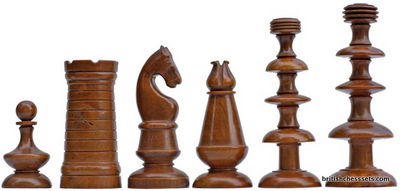
A British set very close to Philidor’s model. Photo: British Chess Sets. Mid-18th century. A design different from the French Régence-type set. -
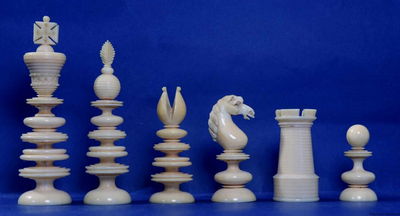
Its early 19th-century development: the Calvert model, long before the Staunton pattern.
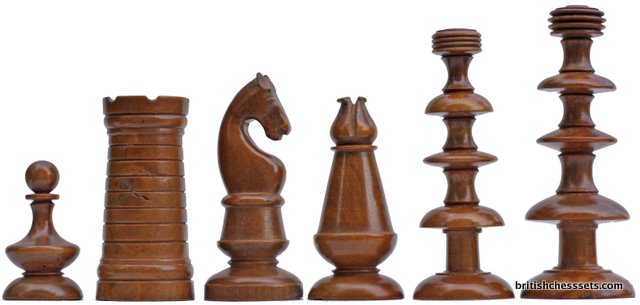
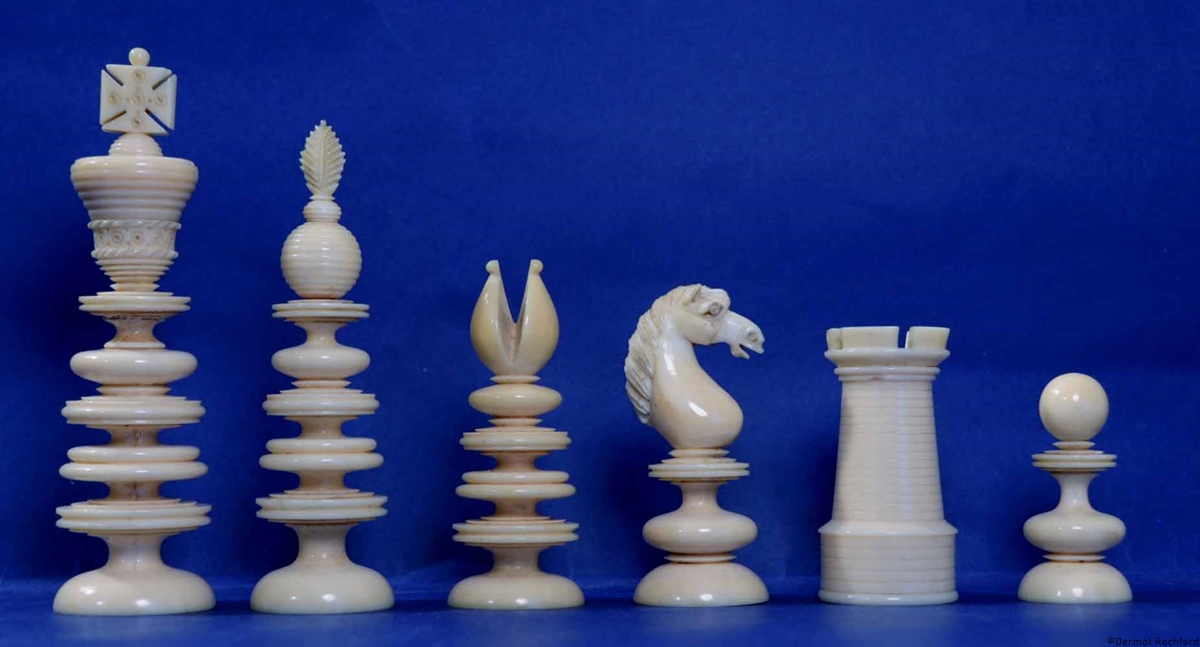
It is therefore possible to conclude that this is indeed an 18th-century English chess set. The exact model does not appear on either of these websites, but they do show very similar examples, described as extremely rare even before taking Philidor’s ownership into account.
We are dealing here with a type of set that would later give rise to the so-called Calvert model in the early 19th century.
Time passed, and we arrived at Friday, March 13, the day of the auction.
It was also an opportunity to take a few photographs on site.
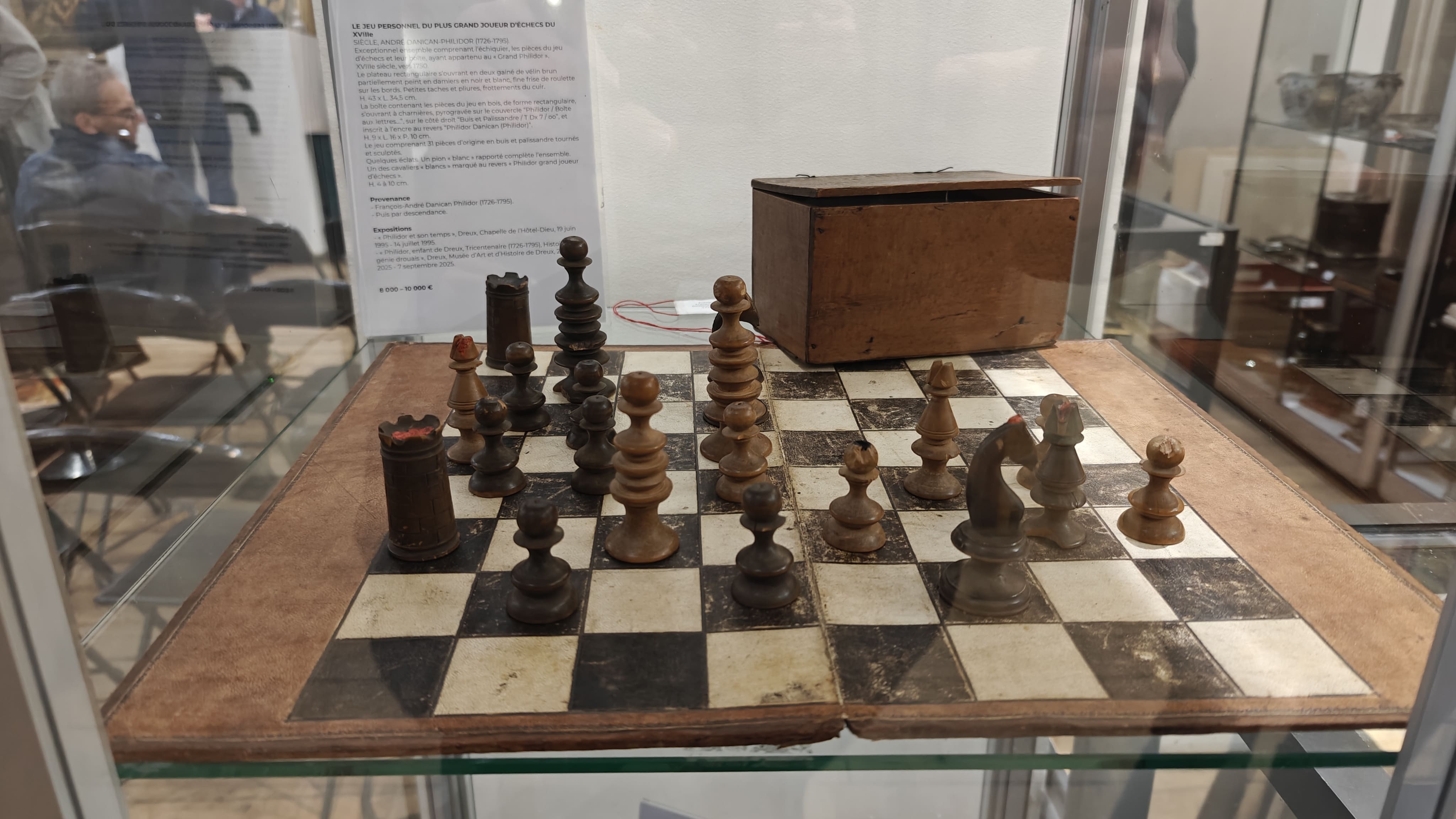
The Rossini auction house is located on Rue Rossini, in central Paris, opposite Drouot, the famous auction complex.
At the start of the sale, Philidor’s set appeared as Lot 58. Very quickly, the bidding soared. From an opening price of €8,000, several online bidders pushed the amount to around €20,000. Then a duel began between someone in the room and a bidder on the telephone. After a contest lasting a few dozen seconds, the auctioneer finally brought down the hammer at €65,000.
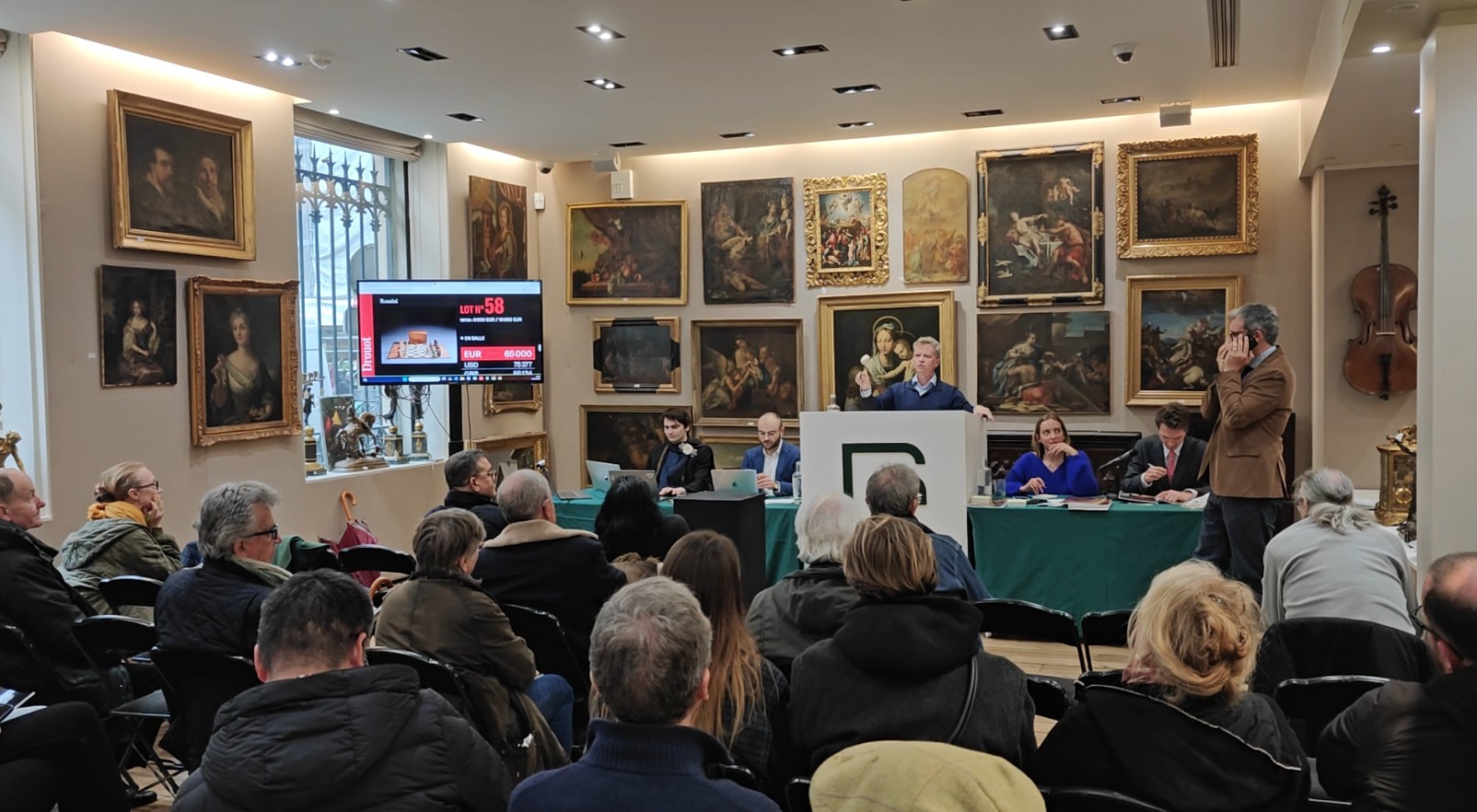
Immediately after the hammer fell, a woman stood up in the room and announced:
“Subject to pre-emption by the Musée Carnavalet.”
Relief.
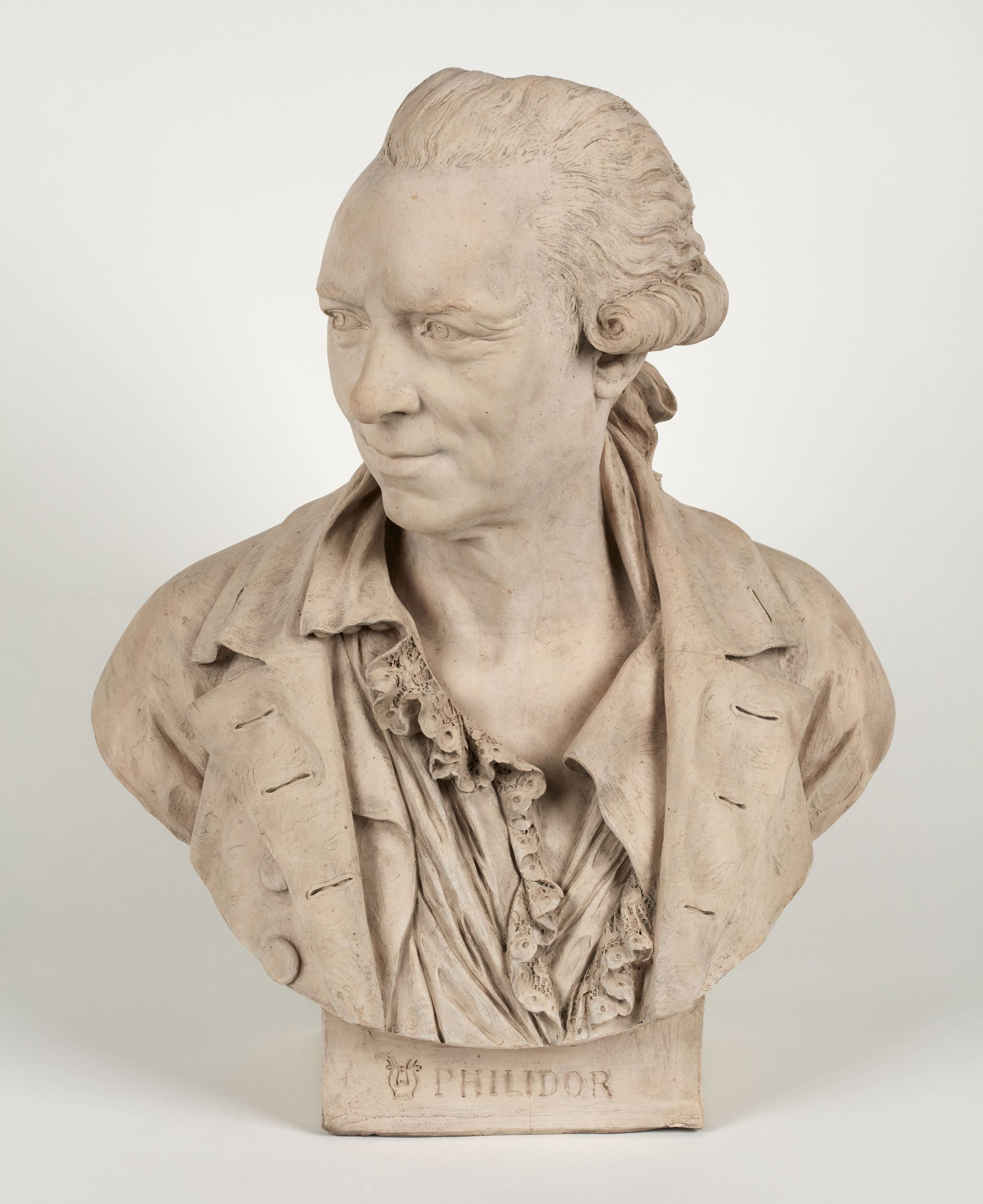
The French state had understood the importance of making this exceptional object accessible to the public rather than allowing it potentially to leave the country. The efforts made with the Ministry of Culture had therefore succeeded, giving the Musée Carnavalet both the financial means and the legal right to acquire Philidor’s chessboard. It is rare for an announced pre-emption not to be carried through, and our exchanges with the Ministry confirm that visitors will soon be able to admire this chess set at the Musée Carnavalet, where Philidor’s bust, sculpted by Augustin Pajou in 1783, is already on display.
The Musée Carnavalet is the museum of the history of Paris and is located in the Marais, a district in the heart of the French capital.
Finally, let us correct an error that is repeated almost everywhere in connection with Philidor, including in the Rossini catalogue. Philidor, a son of France, never fled his country. He travelled to London every year for professional and financial reasons, and ended up stranded in England, treated as an émigré and unable to return to Paris, although this was his dearest wish, as his often deeply moving correspondence with his wife makes clear.