Karel Mokrý has passed away
by Frantisek Stross
The article was originally published on 1 June 2026 on the website of the Czech Chess Federation.
[Translation from Czech by ChatGPT.]
On 27 May 2026, Czech chess grandmaster and former national team player Karel Mokrý died at the age of 67. Czech chess has lost an important figure who left an indelible mark not only through his achievements over the board, but also through his lifelong dedication to the chess community as a chess bibliographer and the owner of a well-known chess bookshop.
Karel Mokrý was born on 7 February 1959 in Prostějov. In 1977, he won the Czechoslovak junior championship, and in the same year he finished fifth at the European Junior Championship in Groningen. He was awarded the title of International Grandmaster in 1984. Among his many tournament successes, his victory at Reggio Emilia in Italy at the turn of 1983 and 1984 stands out in particular. In a strong field, he finished ahead of, among others, former world champion Boris Spassky, John Nunn, and Ian Rogers.
On the domestic scene, he won three silver medals at the Czechoslovak Championships, in 1982, 1985, and 1989. He reached his peak in 1995 in Olomouc, where he became Champion of the Czech Republic. Between 1984 and 1996, he represented Czechoslovakia and later the Czech Republic at six Chess Olympiads. He had an especially successful Olympiad in Novi Sad in 1990, where, playing as a reserve, he completed eleven games without a single defeat and, with a score of 8.5 points, made a major contribution to the excellent fourth-place finish of the Czechoslovak team. He also achieved notable success in the team extraliga, winning championship titles with Lokomotiva Brno in 1995 and with the team A64 MILO Olomouc in 1998.
At the end of the 1990s, he gradually began to reduce his activity as a competitive player. He played his last extraliga game in 2002. He then devoted more and more energy to his chess shop, which he had been successfully running since 1991. For many years, his shop supplied both practical players and chess collectors. It was especially for the latter that Karel Mokrý regularly organized sought-after chess auctions, which were first held on eBay and later moved to the specialized Swedish platform LSAK.
For chess historians and collectors, he left behind an immensely valuable legacy in the form of the extensive bibliography Czech Chess Literature 1806–1945, which was published in 2006 and then in a second, expanded edition in 2015. In addition, he was also the author of a lesser-known German-language publication on the theory of the French Defence, entitled Opening Ideas of Great Chess Masters – French, published in 1992.
In 2023, Karel Mokrý was inducted into the Hall of Fame of the Chess Federation of the Czech Republic.
Honour to his memory.

With the permission of Mrs Hana Modrová, we are publishing an archival interview with Karel Mokrý from the magazine ŠACHinfo. The interview was published in 1995, shortly after he won the title of Czech Champion in Olomouc.
Allow me first to congratulate you on winning your first national championship title at the championship in Olomouc, and to use that as the basis for my first question. Do you think you are the strongest chess player in our country?
I must admit that, at least in terms of my weight, I am definitely the strongest. However, I cannot say exactly how much I weigh, because my scales only go up to 120 kilos, and so far I have not even remotely managed to get within their range. As for the championship itself, I am glad that I finally managed to do it at least once in my old age.
With your permission, I would like to return once more to your “strongest” side — your weight. Have you tried dieting, and if so, which diet would you recommend to our readers?
I have been unsuccessfully trying diets all my life, and the last one I “followed” three months ago was based on a book by Lenka Kořínková. At first I liked it very much; after just five days I felt much better and believed that it was working very well. Then I upset my stomach — my wife claimed it was because of the diet — and for three days I could not move at all, I complained terribly, and then I gave up dieting.
Are you planning to try another one?
So far I do not feel any health problems, but I have big plans: to stop smoking and lose weight.
When you discover some miraculous slimming method, you will surely share it with our readers — or at least reveal it to me! But let us return to your other strong point, the one we are interested in: chess. You were a great talent, but I think you have left something of that talent unfulfilled.
You are probably right. I admit that I lacked diligence. I never liked home preparation; I only ever liked the game itself. I never enjoyed learning openings, and I have been struggling with this problem for twenty years. During the first hour of a game, I invent something that has long been known and is in all the books, and then at the end I lack both the time and the energy I have wasted.
And what about physical fitness? Do you practise any sport?
Nowadays I play sport only very exceptionally, or else I watch it on television. It used to be different: I played table tennis competitively and tennis recreationally. I would like to return to it, but for reasons of time I do not really believe I will.
As you yourself say, you like chess as such, as a game. So why do you play so little?
I am a home-loving type. I do not much like all that endless travelling. When I used to play, I spent 200 days a year at tournaments, and quite possibly I had already grown tired of it. Since I have had a family, I like being at home even more. Moreover, since the opening of the chess shop in Bratislava, which after the split of the country moved to Kostelec na Hané, there has been even less time. In the past I played more and the business came second; now it is the other way round.
Is this decision the end of youthful recklessness and a search for security for the future? How does a collector of books — which you were, are, and certainly will continue to be — become, let us say, a seller of them?
It is like everything else: one thing leads to another. I have been collecting books for many years, and alongside the additions to the collection, duplicates and surplus items also began to accumulate. Something had to be done with them. So we tried renting three rooms in a family house in Bratislava, and the foundations of the chess shop were laid. I thus raised my hobby, collecting, to a slightly higher level — or perhaps rather combined it with my profession. I enjoy it, and for the future I really consider it more promising.
You now have a mail-order shop in Kostelec na Hané. How did the shop prosper before and after the split of the country? Did that have any effect on its operation?
Only now are we getting back to where we were before the split. We already had our clientele, but with the division we lost a third of our customers. Many chess players from Slovakia complain that they cannot buy anything there, but we cannot send anything there from our side either...
Would you ever like to expand your activity to include direct, over-the-counter sales?
I would like that very much — not to be open every day, but two or three times a week for four hours. I would consider that ideal. Many people first want to see what it is they are buying. Moreover, many customers buy more things than they originally intended. But first we would have to find suitable premises for that purpose, and it would have to be in a larger town, perhaps in Prostějov. As things are now, someone may travel a long way to visit us and we are not at home. And besides, we are desperately lacking a telephone!…
Still, you are satisfied. How is the shop doing?
I would prefer it if chess players had more money — or rather, if they spent more. But given that I am doing what I enjoy, I am satisfied. My hobby has become my profession.
Your wife helps you in the business. Did she also play chess?
Yes, she played chess. She was probably around third class, but ever since she got married she has stopped playing. My son also plays chess, but only like any other game; he is just as happy to play draughts or Ludo. And I admit that I do not lead him towards chess in any way.
What can you recommend from your stock to your customers and to our readers?
We have quite a large selection; the basic offer can always be read in ŠACHinfo. In addition, for regular customers we publish a list of second-hand items. In Bratislava we still had an employee who compiled a list — a kind of wanted list of titles being sought. We would then write individually to customers telling them that we had what they wanted. At present we cannot manage this service, but we intend to return to it in time.
You are a collector. What do you collect, and what do you value most in your collection?
I collect chess books published up to 1945. Apart from that, if I see something interesting — older chess sets, for example, or clocks — I cannot resist. What is the best thing I have? That is hard to say. I have many tournament books, but perhaps the one I like most in my library is The First Slovak Chess Book, which was published in 1930, and I have a numbered copy, number two! This book exists in about eight different editions, but I value only the numbered copies. What is interesting is that the original binding is the one that looks as if it were not original: it is blue-green and rather ugly.
I also have another very interesting item: the scoresheets from the Fourth Congress of the ÚJČŠ in Plzeň in 1911, where Duras also played at the time, but under the pseudonym Ráz. It was a tournament from which half the games are unknown, and, apart from one, I have them all. And that is the special feeling that collecting gives you. When I rummage through these things and come across the scoresheets from the ÚJČŠ congress, I can say to myself: this is something only I have. If the games were published, it would no longer be the same — not to mention that they would completely lose their value…
Now back to chess as a game. Do you prefer closed tournaments or opens?
I definitely prefer closed tournaments. There I know whom I am going to play, roughly how many points I need to score to maintain my Elo, and one defeat does not eliminate me from the fight for a top place. For the organisers, however, it is considerably more demanding.
Do you prepare for your opponents?
In opens, rarely. Usually only in the final rounds. Often, in the early rounds, I do not even know my opponent. In closed tournaments, of course, I tend to be a little more diligent.
And what about the championship you won? How did you feel playing there?
Good. I slept at home and commuted.
Do you play better at home or abroad?
Basically, one could say that the closer I am to Prostějov — that is, to home — the better I play. That is because I have my family and relatives here; in short, I lack nothing…
Do you like playing for teams?
My results for teams are not bad — perhaps even better than in individual events — but I play team competitions rather reluctantly. This is only because losing for a team is several times more unpleasant than losing on one’s own account. Especially when the match then ends 3.5–4.5! On the other hand, decision-making is simpler: whether I should accept, decline, or offer a draw, or play for a win. That is something the captain decides and tells me. In individual play it is more complicated.
Do you prefer a strong team, or would you rather play in a good group of people?
A good group is, on the other hand, the reason why I actually like team competitions. When we occasionally get together, go off to play, and understand one another, it is nice. Now that I live in Prostějov, I have also played about eight games for them in the division, mostly for sentimental reasons — after all, I grew up there!
Do you enjoy representing your country at Olympiads?
One could say yes. But after the experience of Moscow, which I consider by far the worst Olympiad in history — as, I think, does everyone who took part in it — it somewhat dampened my enthusiasm. I can understand that organisation may limp along, but what happened in Moscow could hardly have been worse: garden chairs, terrible chessboards, awful pieces, unbelievable tables — simply everything… Besides, towards the end I was a little ill. But I remember all the other Olympiads fondly.
When you imagine that the next Olympiad is supposed to be in Yerevan, do you feel like playing?
Absolutely not! Even if I were nominated ten times over. It would not be a question of money, or anything else. I would not go there, because I am afraid to go there; it seems terribly risky to me.
You play league chess both at home and abroad. How would you compare them?
These days I prefer playing here. In Austria, where I play for Vienna’s Margareten, we do have a very good team, but still there is the language barrier, even though I know a little German; and the travelling is also very unpleasant. When I was deciding whom I would play for in the European Club Cup, I chose Brno. I played all the games for them, whereas for the Viennese team only a few. I also played in the German Bundesliga, but I will probably stop after this season. Travelling more than 900 kilometres each time is also a little dangerous. You set off on Friday, play on Saturday and Sunday, and then immediately after the game travel back. Until now I have been doing it in a Škoda 120, and that car could tell stories…
They say you prefer to drive yourself. Even on those long “hauls”?
That is true. I feel safe only when I am behind the wheel myself. One could say that in this respect I trust absolutely no one.
It is also said about you that, as a matter of principle, you do not use high beams while driving. How much truth is there in that?
It all probably started about eight years ago, when Aleš Pekárek and I were driving through East Germany and Sweden to Gausdal. We needed to catch the ferry in Rostock and had a reserve of several hours. The first delay came at our border. On the basis of some denunciation, they searched us for nearly two hours. But they had a hard time: we had nothing, and when there is nothing, it is difficult to find anything. Then we had a puncture, and another half-hour was gone.
In the end we were in slight time trouble, so we had to speed up for the last eighty kilometres. We were racing along in the Škoda 120, hit a hare on the way, and I merely remarked that a hare was nothing — with a deer, that would be something else… I did not have to say it twice: one jumped into our path, and to this day I do not know how I managed to control the car as it balanced between the verge and the ditch. A few metres in front of us it lay dead, and the car was not in the best condition either.
And then it was like something out of a fairy tale. Out of nowhere there appeared a man whom I later called the magic grandfather, and he saved us. He had us towed away, dealt with everything with the police, who asked questions with helpful nods for us, along the lines of: “You had your high beams switched off,” and they nodded, and we nodded too; “You were driving only about fifty,” and they nodded, and we nodded too.
Then he took us to a garage, where he convinced them that the car had to be repaired immediately, gave us breakfast, then took us to the insurance company, arranged everything, collected the repaired car, gave us lunch — and all this simply out of entirely selfless motives. We left him only some Marlboros and some schillings we had with us, and set off again with a one-day delay. On the way we took a nap so that we would be fresh, and we almost missed the next ferry as well. In the end we arrived at the game only a few hours before the start of the first round. And after that experience with the deer, I practically drive only with dipped headlights…
And what about sleep? Do you have problems with it after a game, or while driving?
No, that does not trouble me. After a game I fall asleep without any problem at all. The key is the lying position. Then I fall asleep immediately. Once, when I used to go to school by bus, I even knew how to sleep standing up. Rather, at the Pardubice Open, I had the problem of getting up in time to make breakfast. I usually woke up early, but it seemed too early to me, so I always slept a little longer, and I only just managed to get to breakfast…
Since you mention breakfast, what are your favourite foods?
I do not have anything very definite; I like several dishes. But, for example, in Slovakia I enjoyed eating brynzové halušky; I looked forward to them and always ate three or four portions… And I also like a classic schnitzel.
What do you like to drink with that?
Most people will be surprised, but beer is not among my favourite drinks. I used to drink a lot of lemonade, and now I have switched to unsweetened mineral water…
Slowly but surely, we are getting towards the end. Do you use a computer for preparation?
I tried it several times, even earlier, but I never developed the proper relationship with it. Once I bought ChessBase, then once an update to a new version, and that was all.
Offer the readers one of your games — one that was nice and has not been published here!
Perhaps the readers will be satisfied with my game against Nunn from Reggio Emilia 1983/84. I think that although it was full of mistakes, it was very interesting, and besides it comes from what was, together with this year’s championship, my best tournament.
Thank you for the game and for the interview. And my final question? I certainly will not come up with anything world-shattering, so please reveal your nearest plans to us.
Last year and the year before I practically did not play. This year it has improved. I have a closed tournament in Zlín ahead of me — it will be reaching its climax while this issue is being closed — then a half-tournament, half-holiday in Italy at the beginning of September, and then, in a home setting, the preliminary group of the European Club Cup.
Břetislav Modr spoke with Karel Mokrý.
-
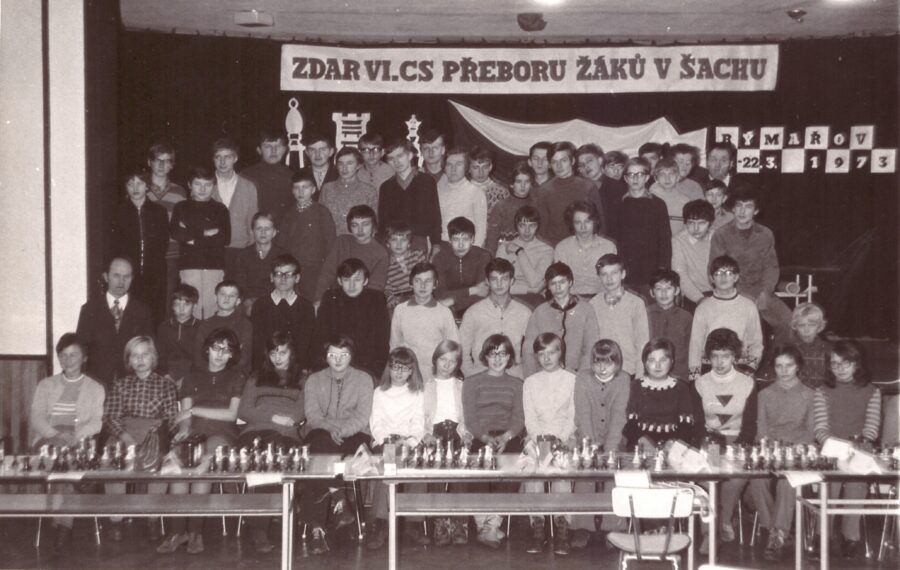
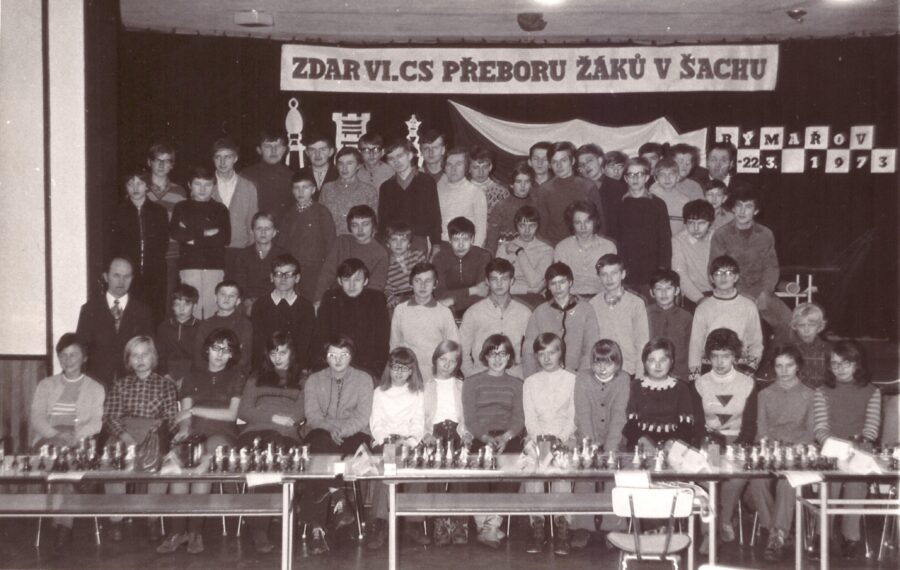
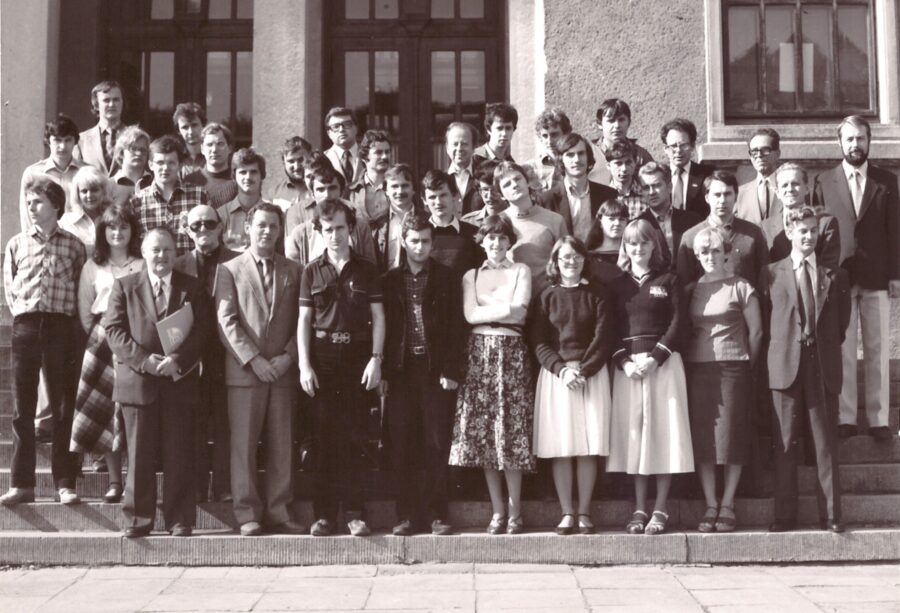
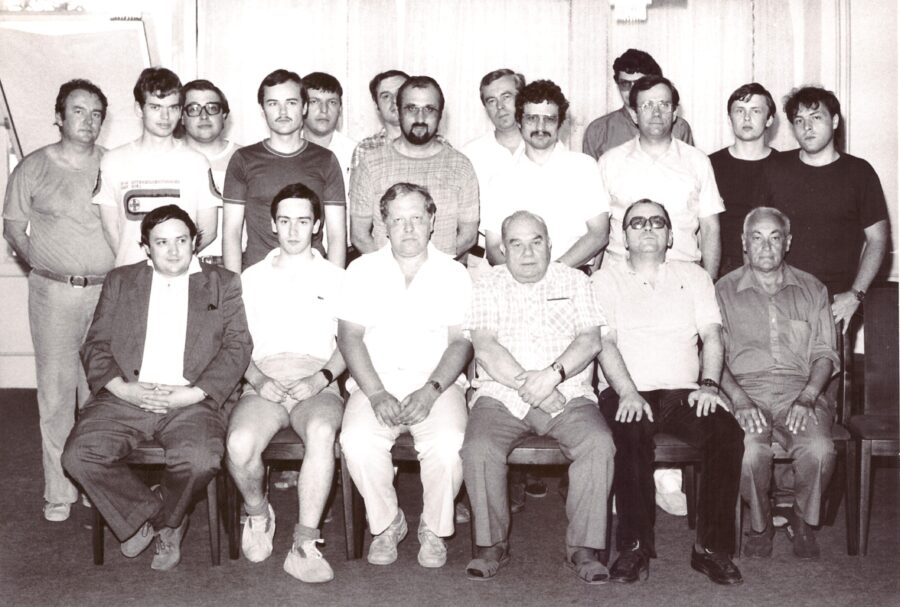
National pupils’ tournament in Rýmařov in 1973. Karel Mokrý is standing in the back row, first from the left. -
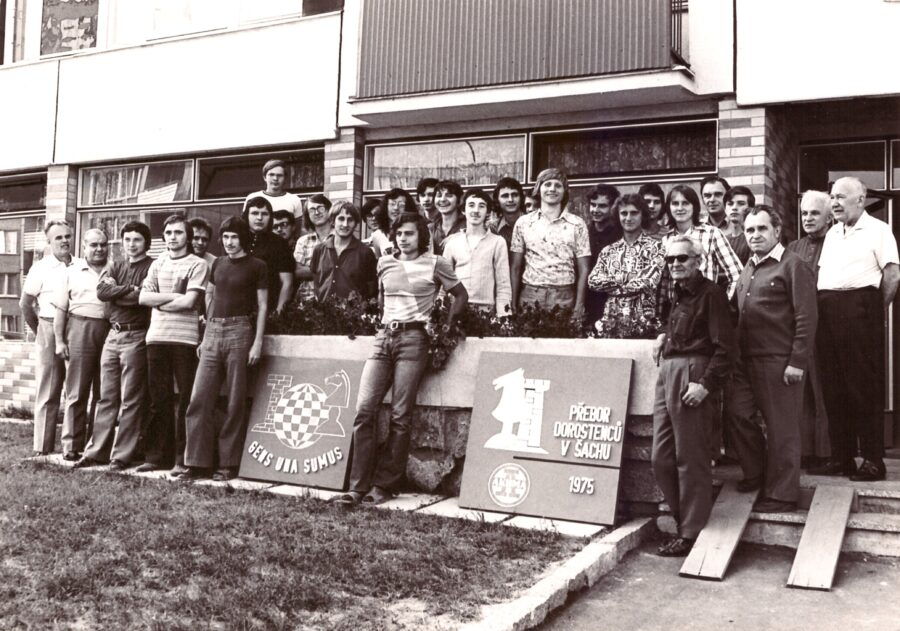
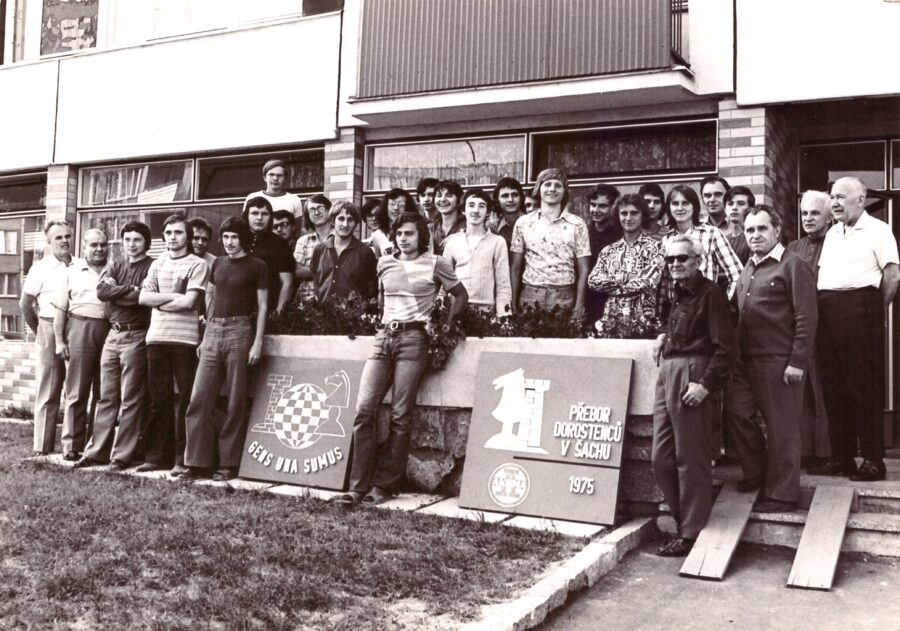
Czechoslovak Junior Championship in Mladá Boleslav, 1975. Karel Mokrý is seventh from the left. -
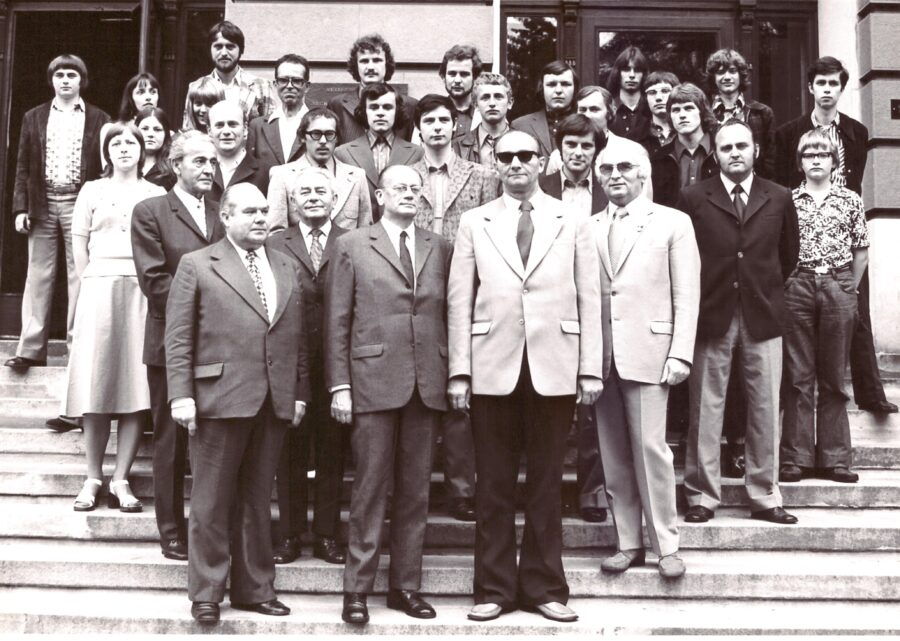
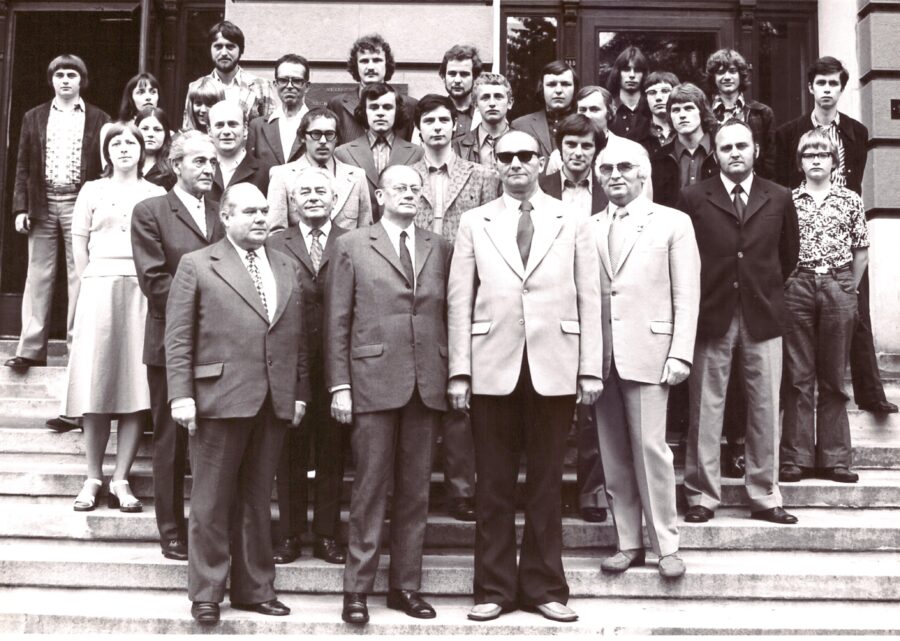
From the Czechoslovakia–GDR under-25 match held in Karlovy Vary in 1975. -
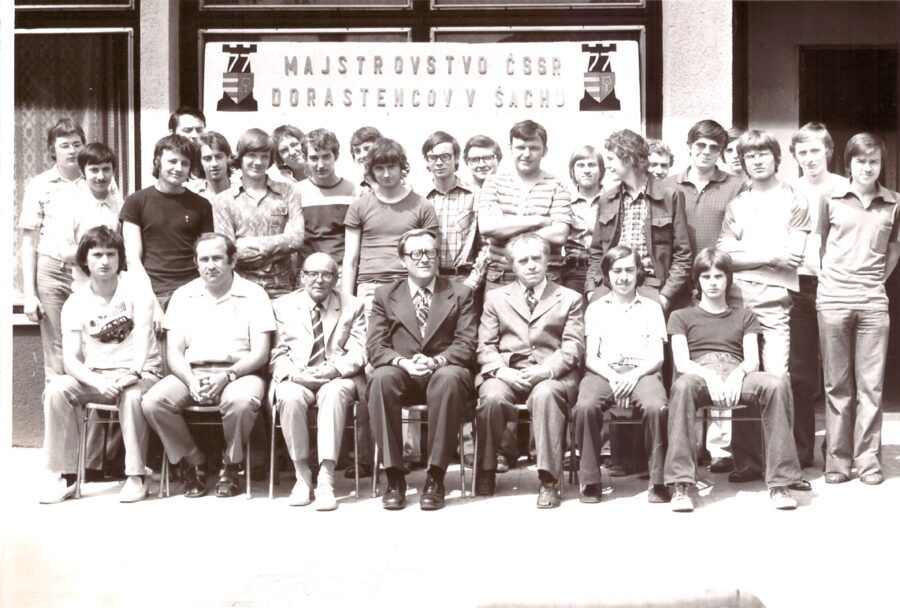
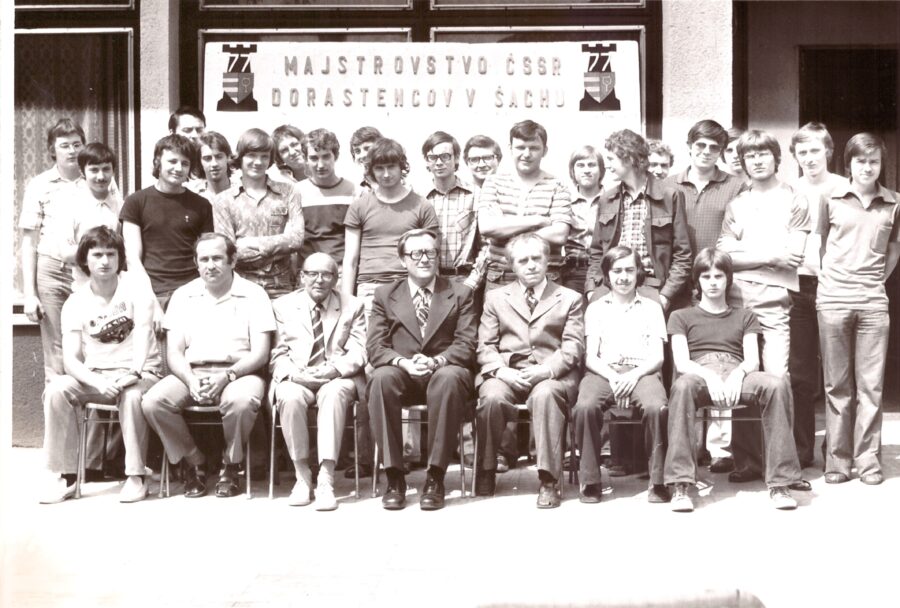
From the victorious Czechoslovak Junior Championship in Dunajská Streda, 1977. -
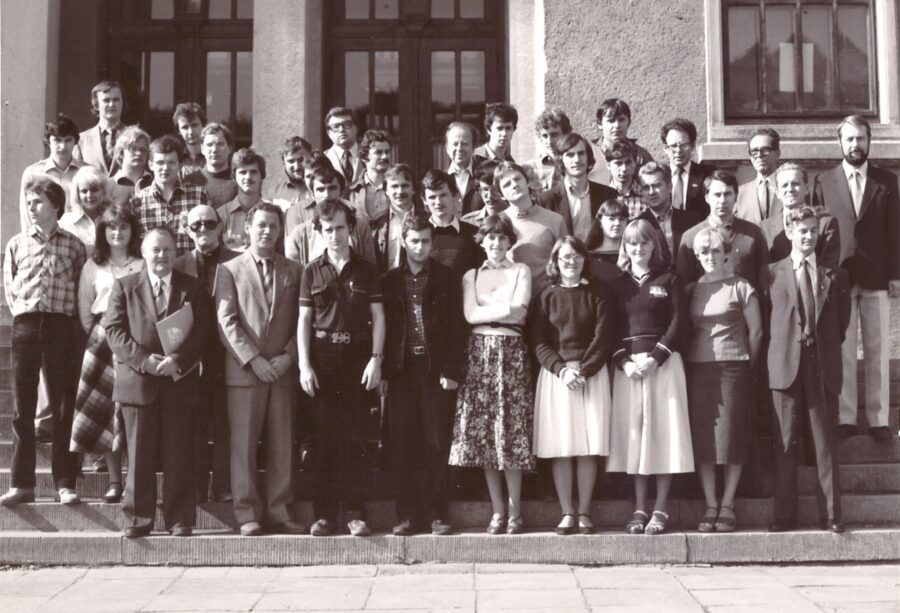
Zinnowitz, 1981. Triangular under-26 match between the GDR, Poland, and Czechoslovakia. -
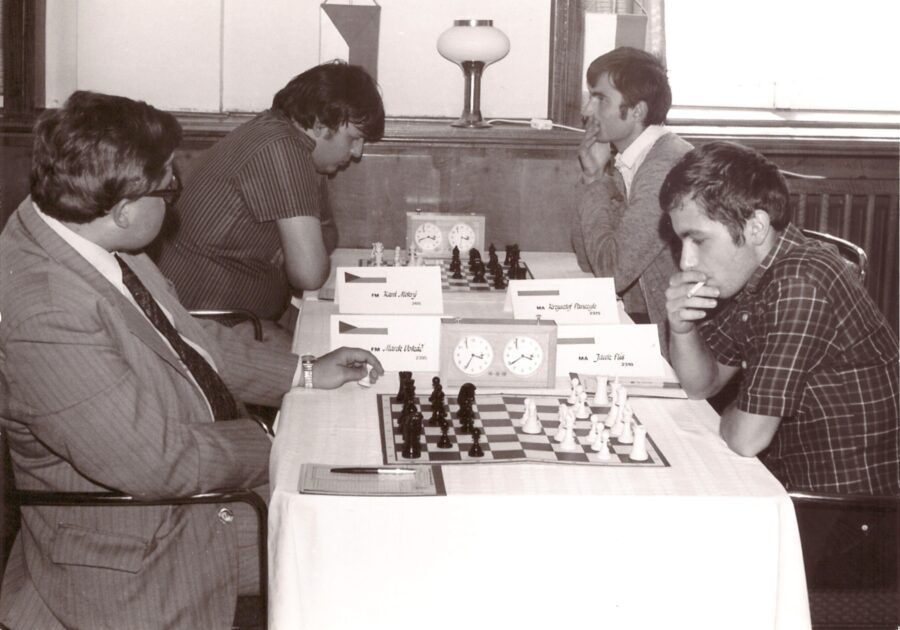
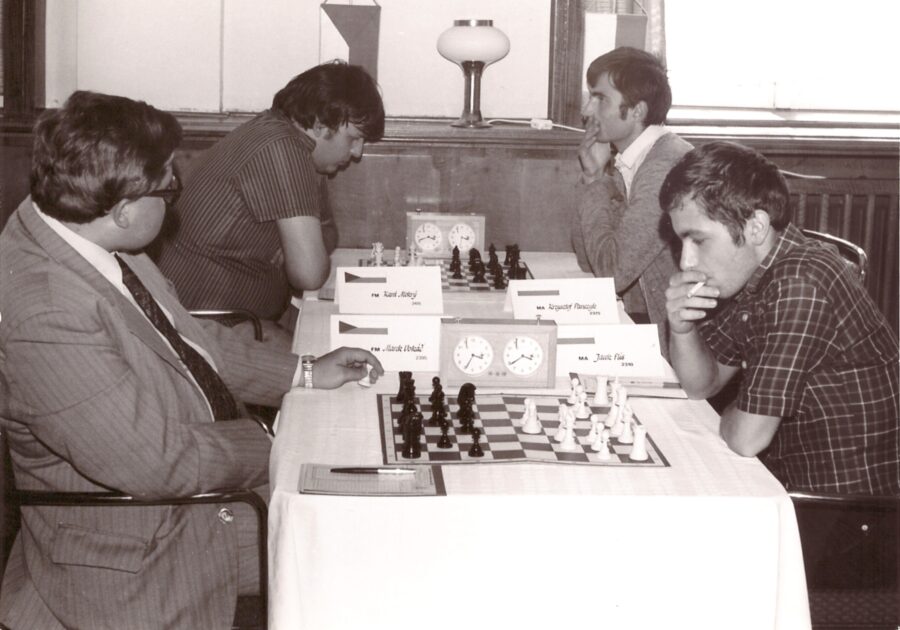
Zinnowitz, 1981. The games Mokrý–Panczyk and Flis–Vokáč during the Czechoslovakia–Poland match. -
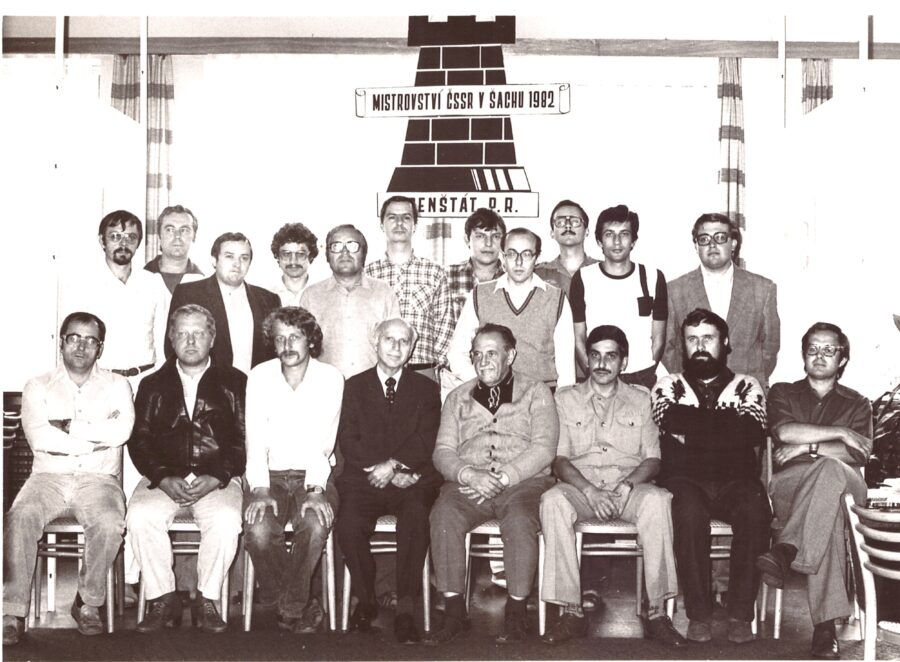
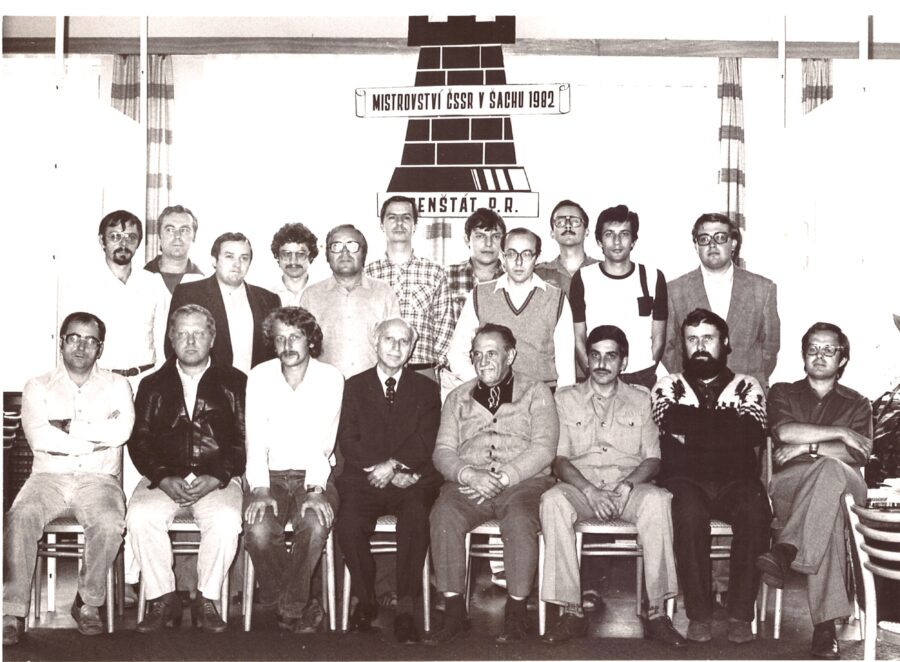
Czechoslovak Championship in Frenštát pod Radhoštěm, 1982, where Karel Mokrý won the silver medal. -
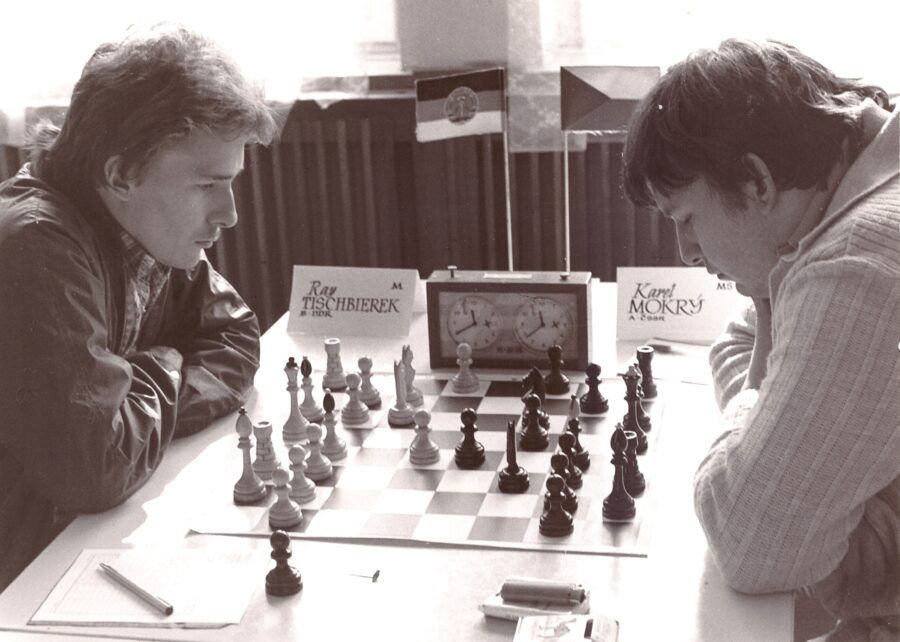
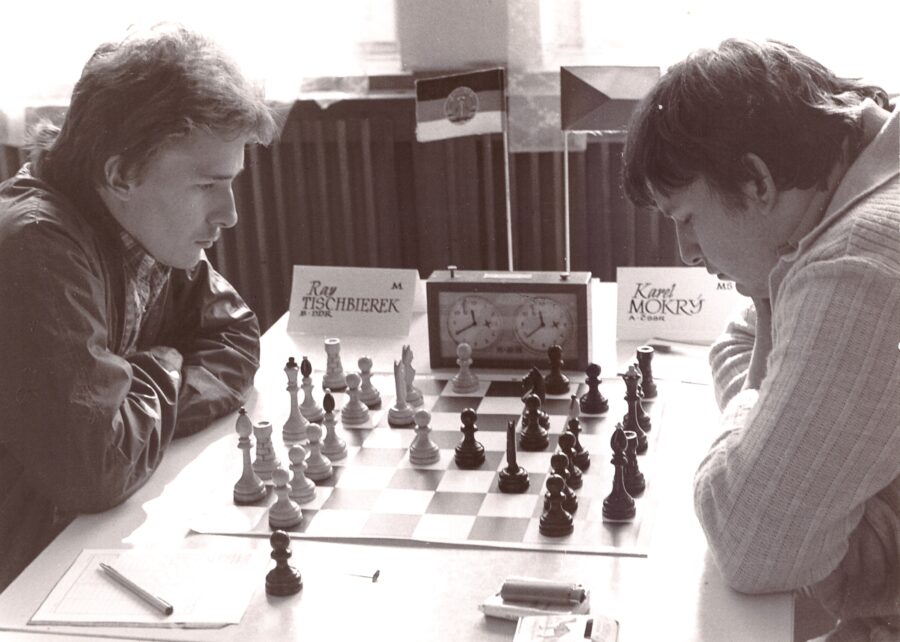
The game Tischbierek–Mokrý during the Czechoslovakia–GDR–Poland under-26 triangular match in Houštka near Stará Boleslav in 1982. -
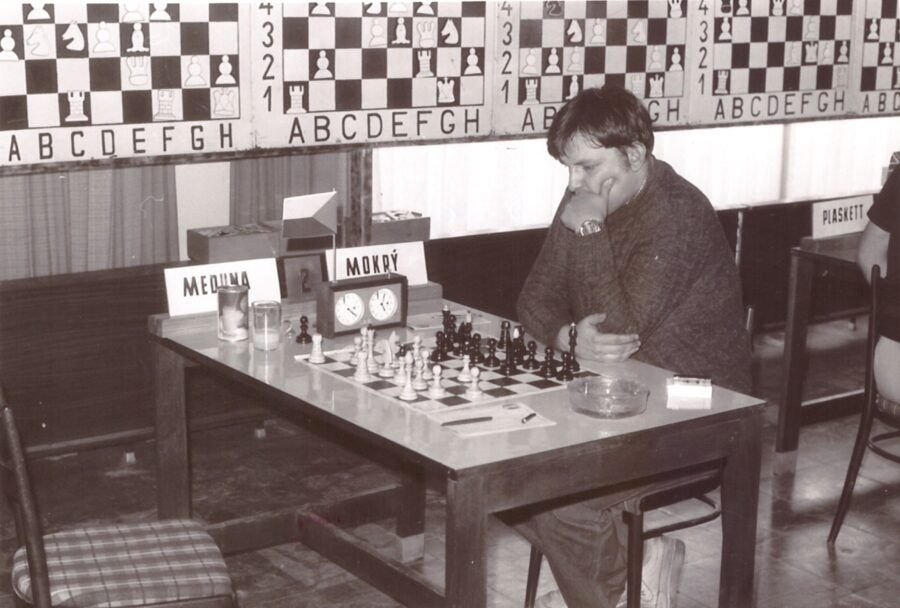
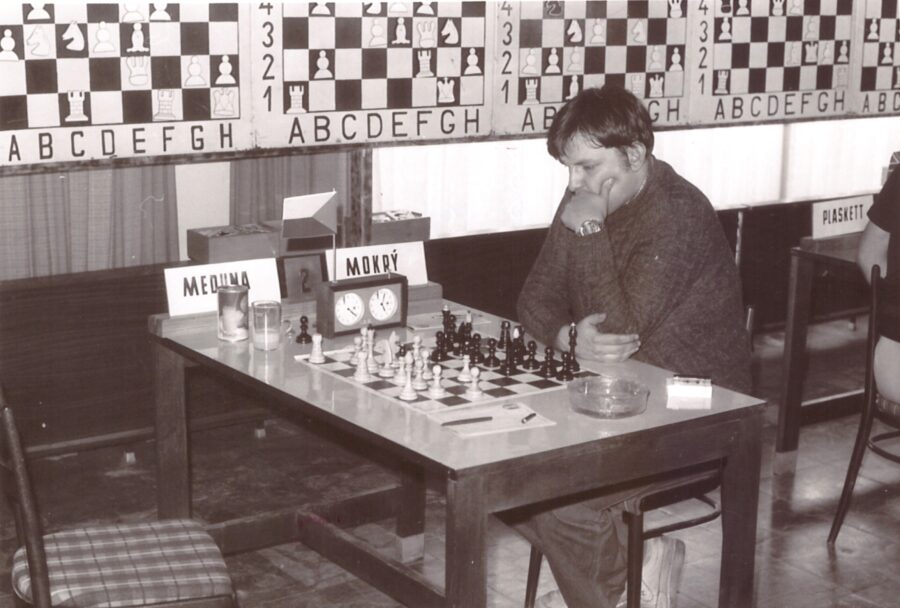
Karel Mokrý during his game with Eduard Meduna at the Réti Memorial in Trnava, 1984. -
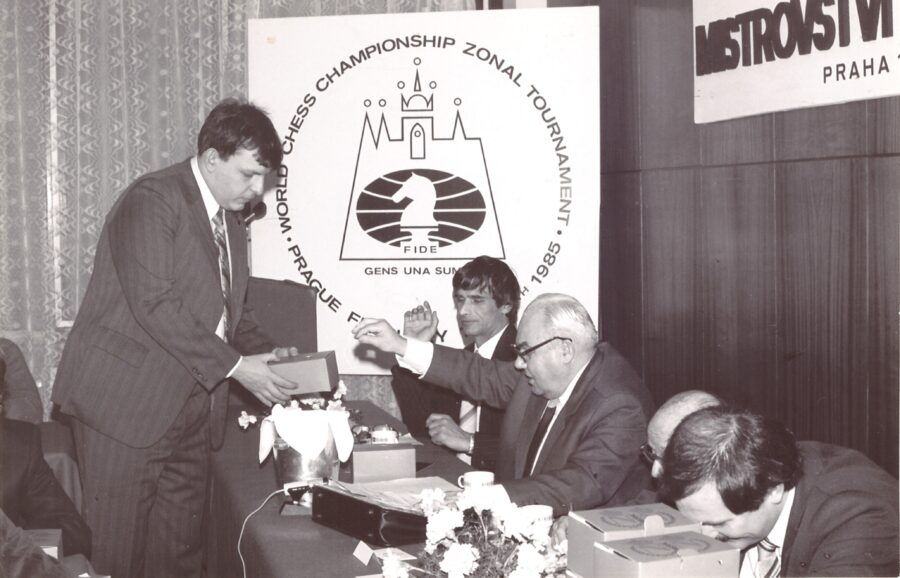
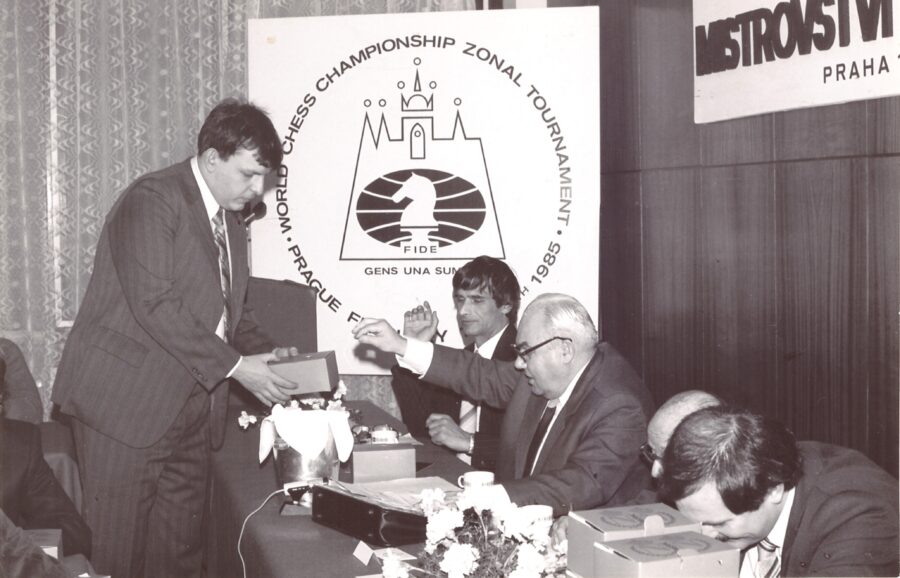
Karel Mokrý during the drawing of lots at the zonal tournament in Prague, 1985. -
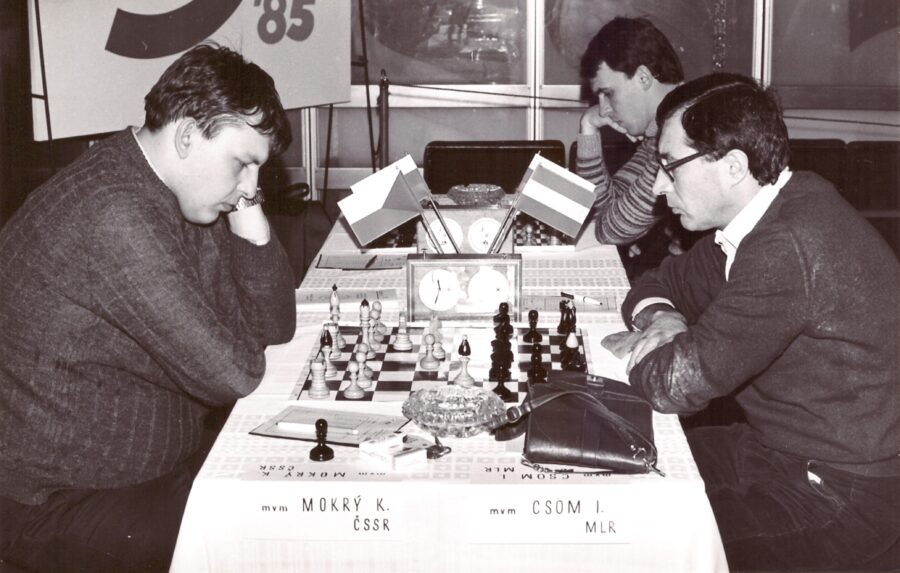
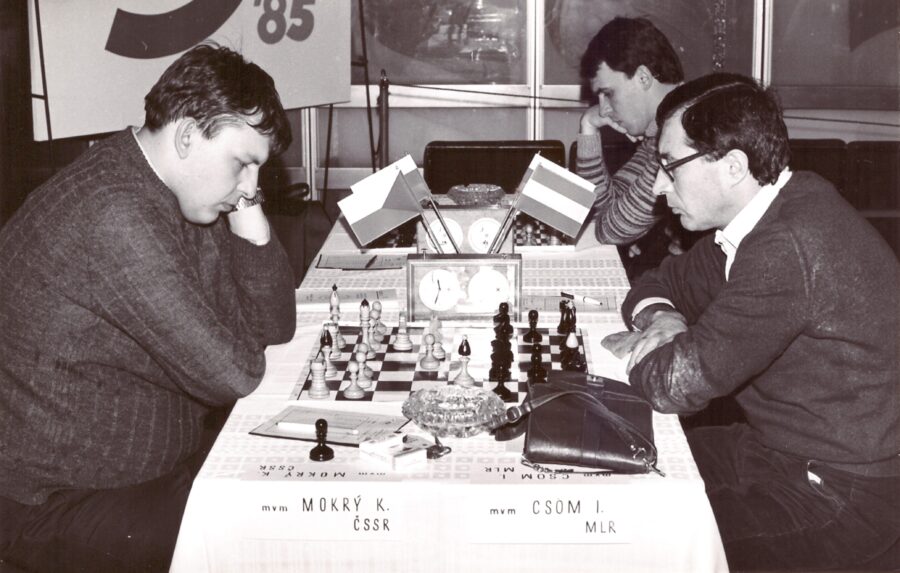
The game Mokrý–Csom at the zonal tournament in Prague, 1985. -
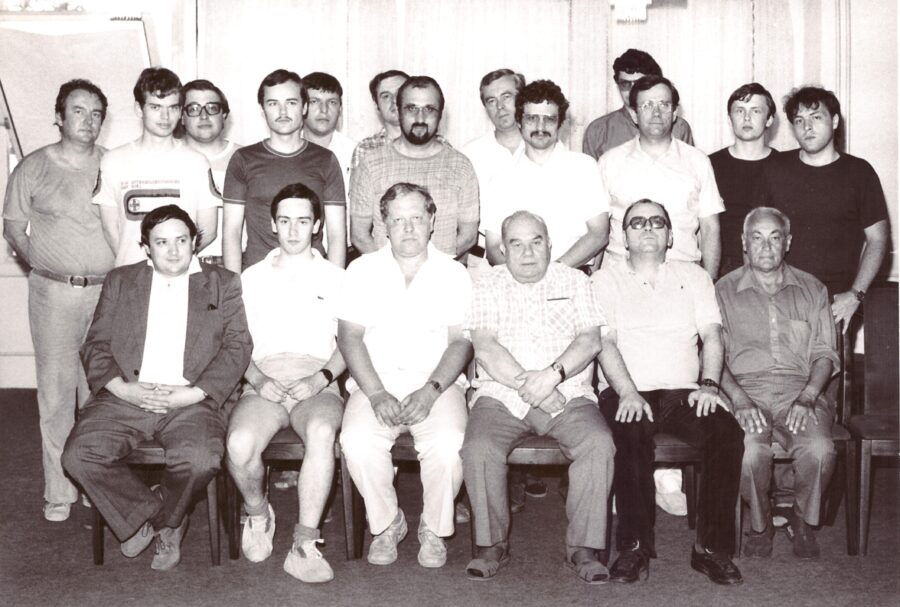
Czechoslovak Championship in Prague, 1986. -
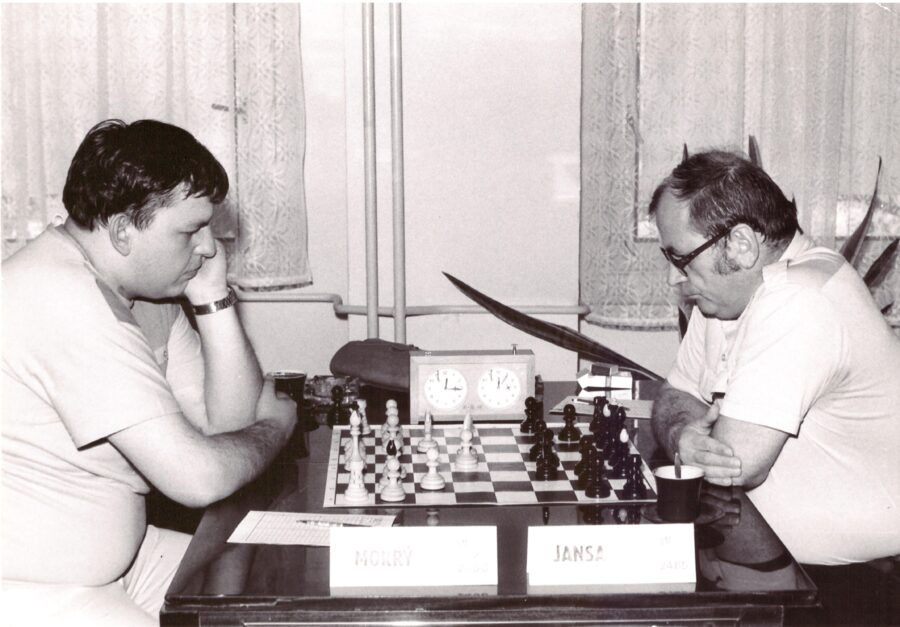
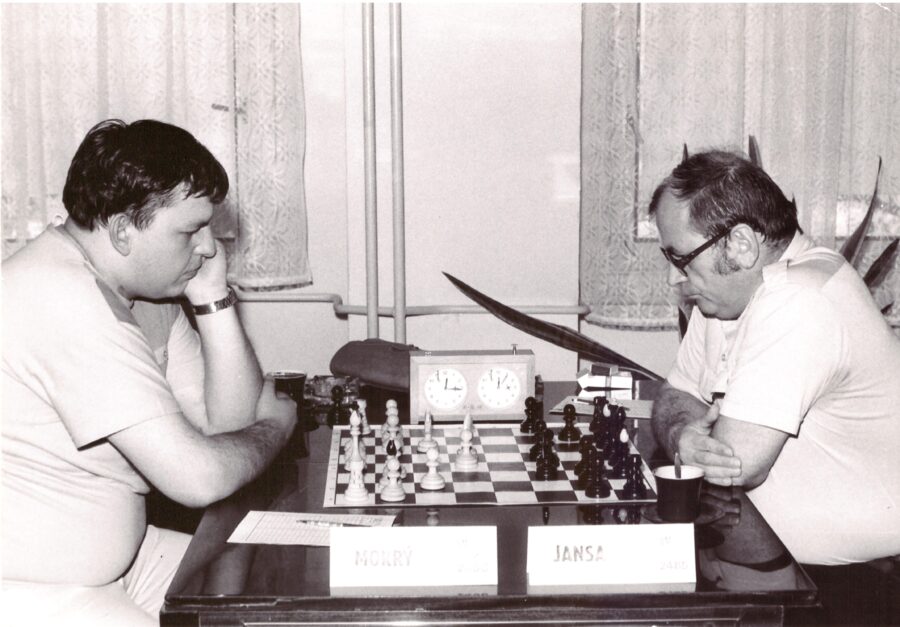
The game Mokrý–Jansa at the Czechoslovak Championship in Prague, 1986. -
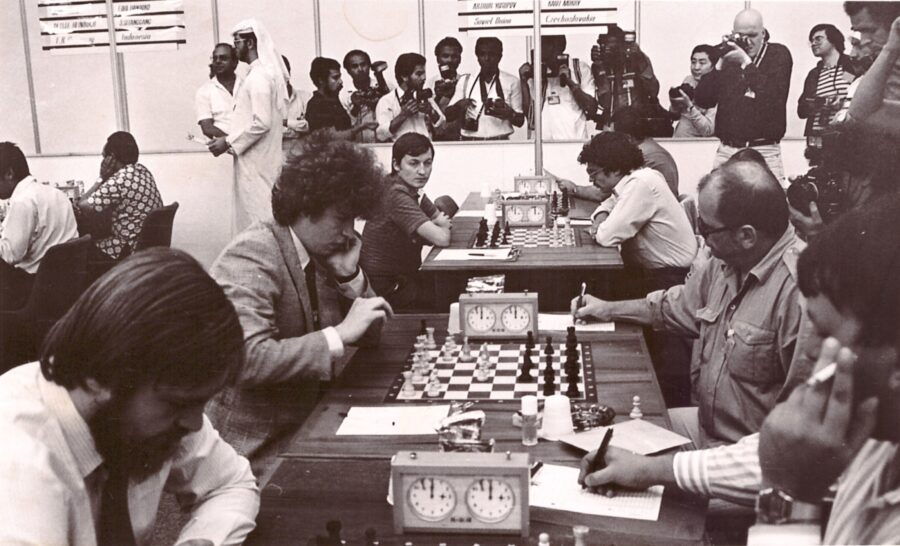
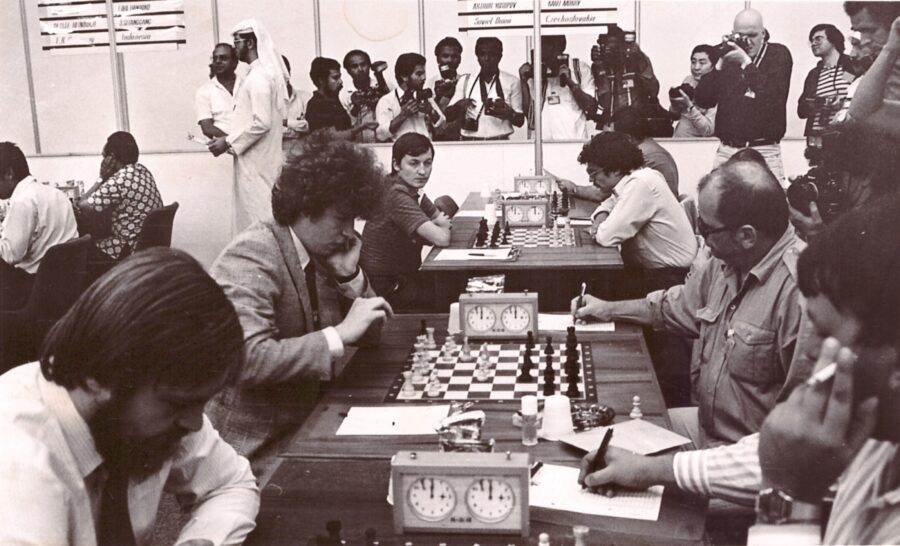
From the Soviet Union–Czechoslovakia match at the 1986 Chess Olympiad in Dubai. -
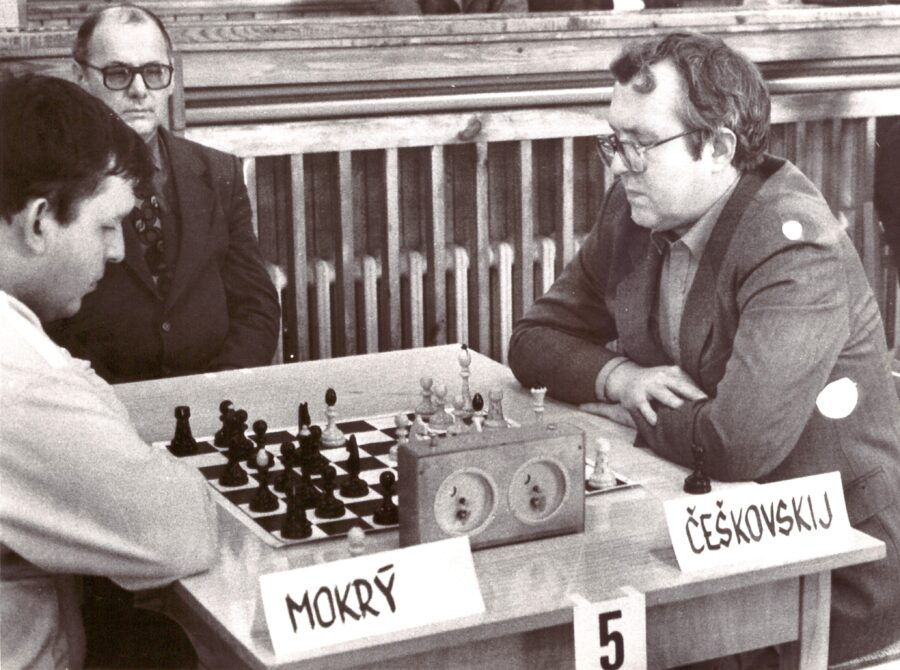
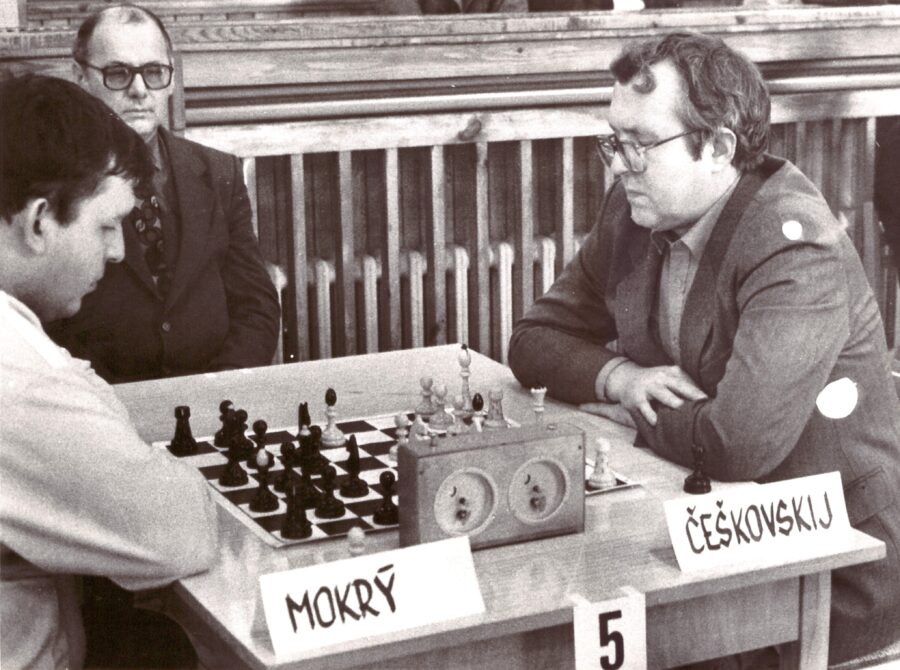
The game Ceškovskij–Mokrý at the 15th edition of the Rudé Právo Cup blitz tournament in Plzeň, 1987. -
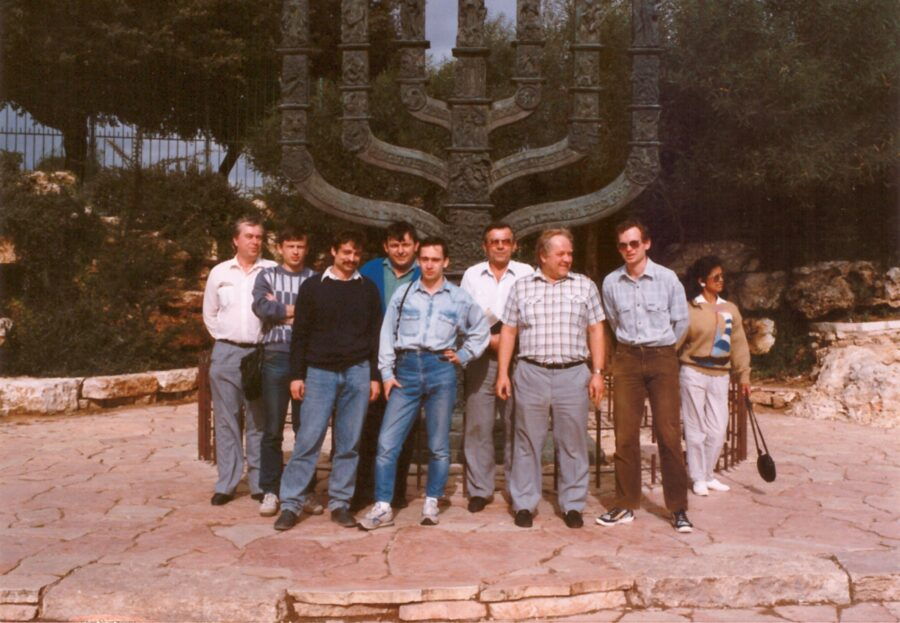
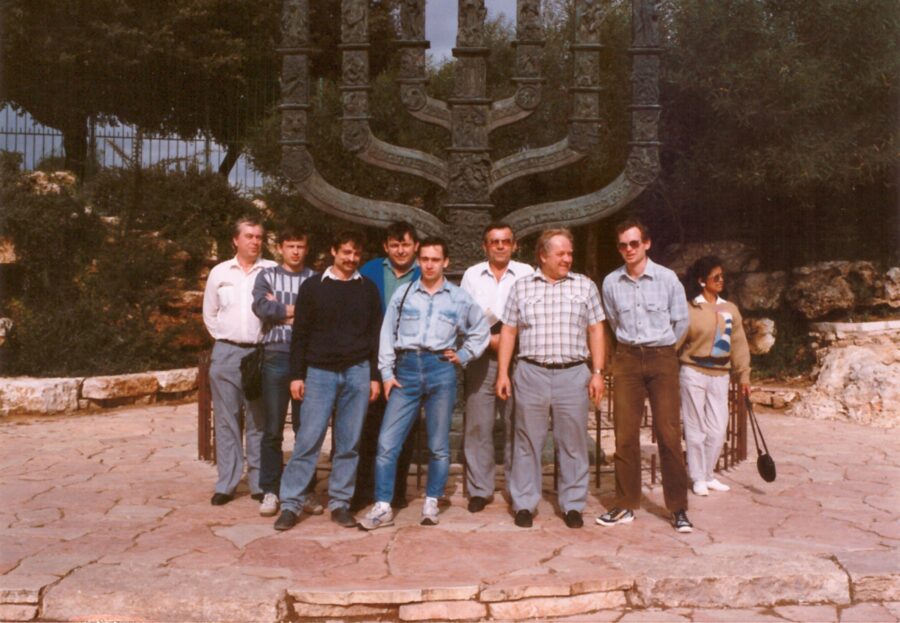
Czechoslovak delegation at the European Team Championship in Haifa, 1989. Here on an excursion in Jerusalem, at the Knesset Menorah. -
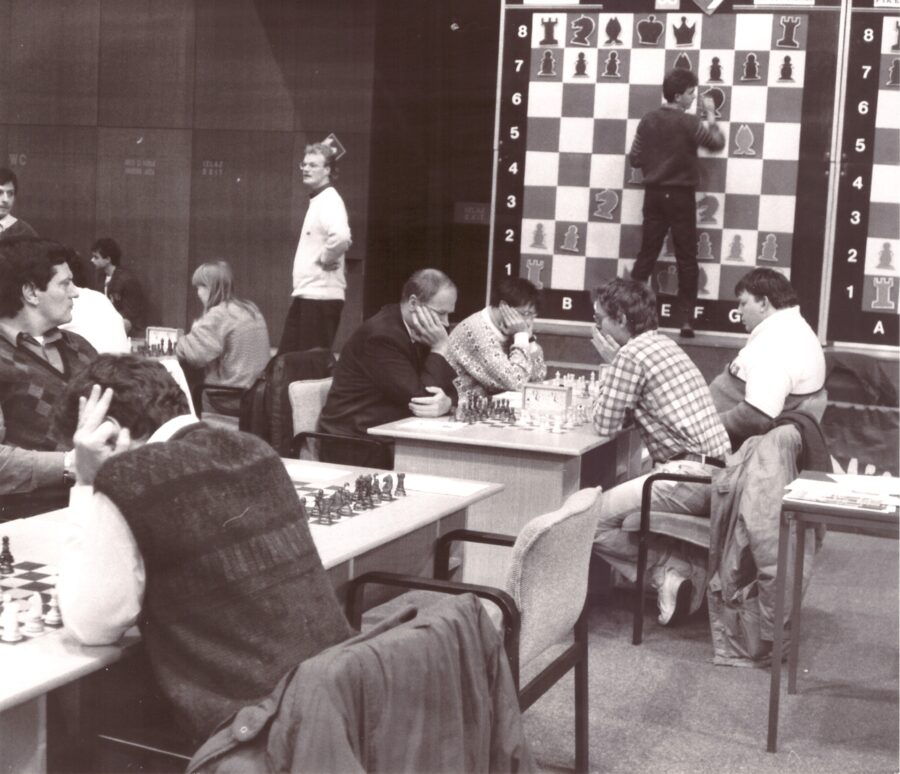
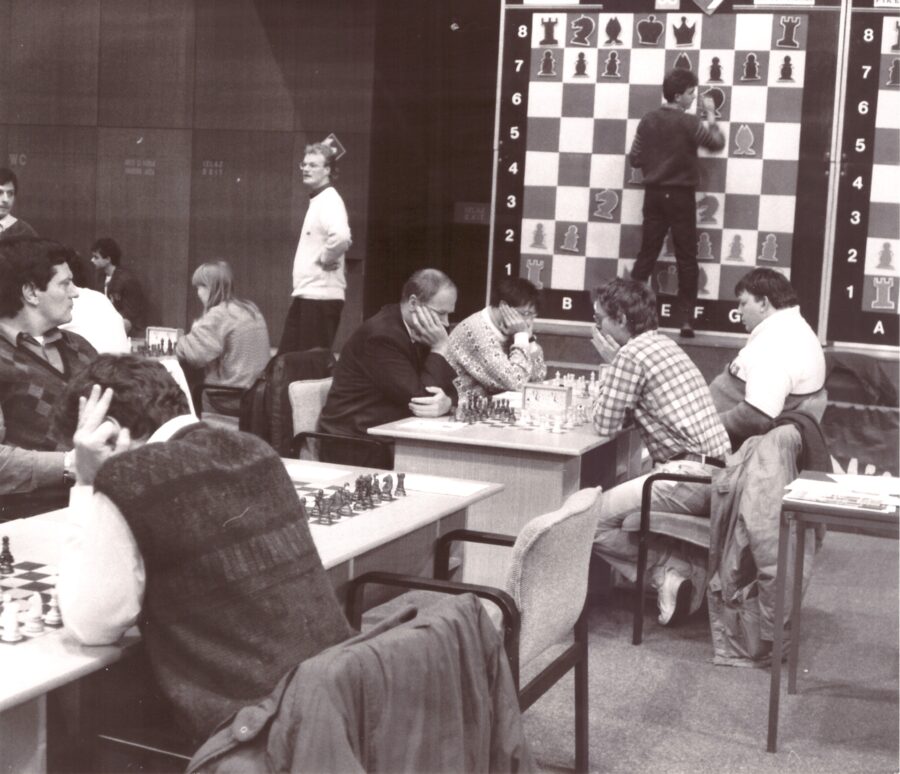
Yugoslavia–Czechoslovakia match at the 1990 Chess Olympiad in Novi Sad, where Czechoslovakia achieved an excellent 4th place. -
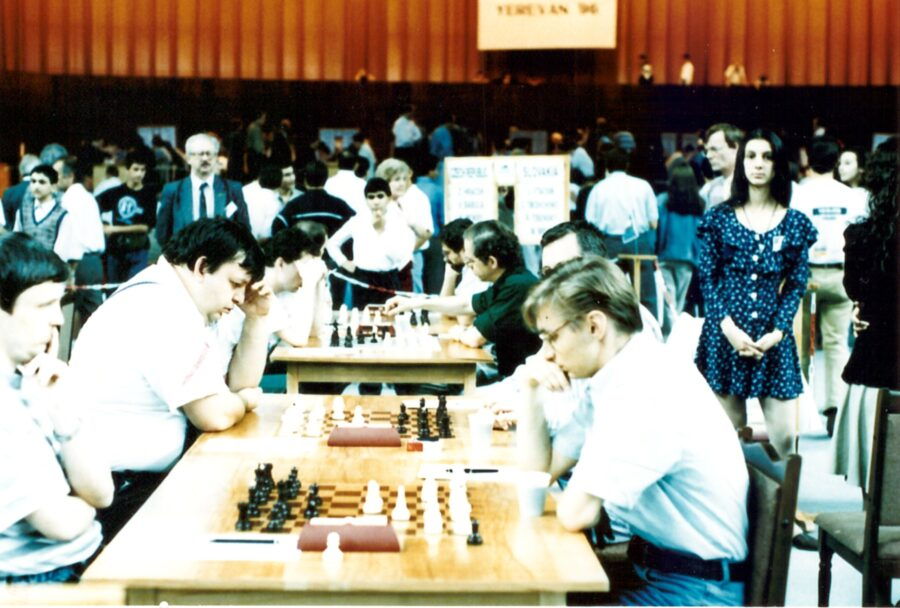
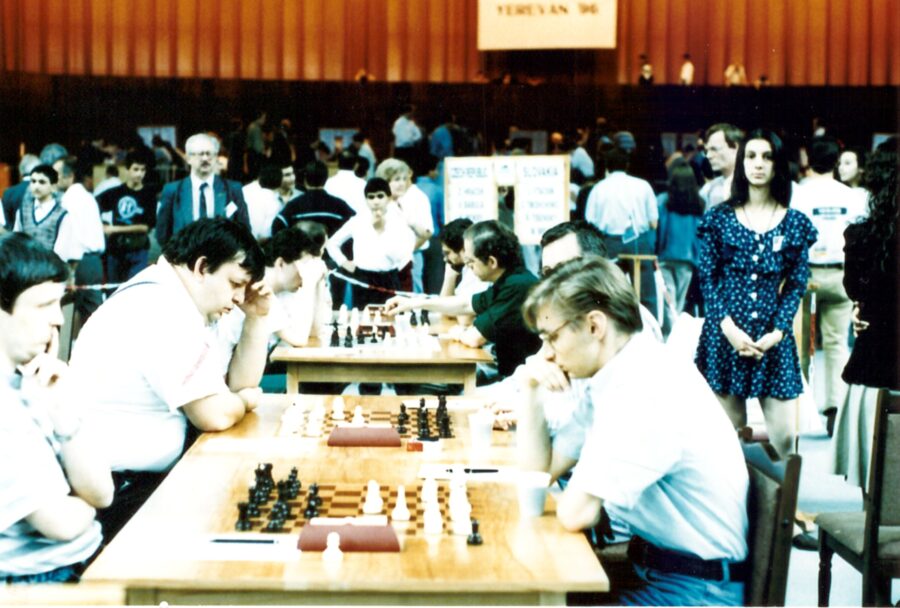
Czech Republic–Slovakia match at the 1996 Chess Olympiad in Yerevan.